

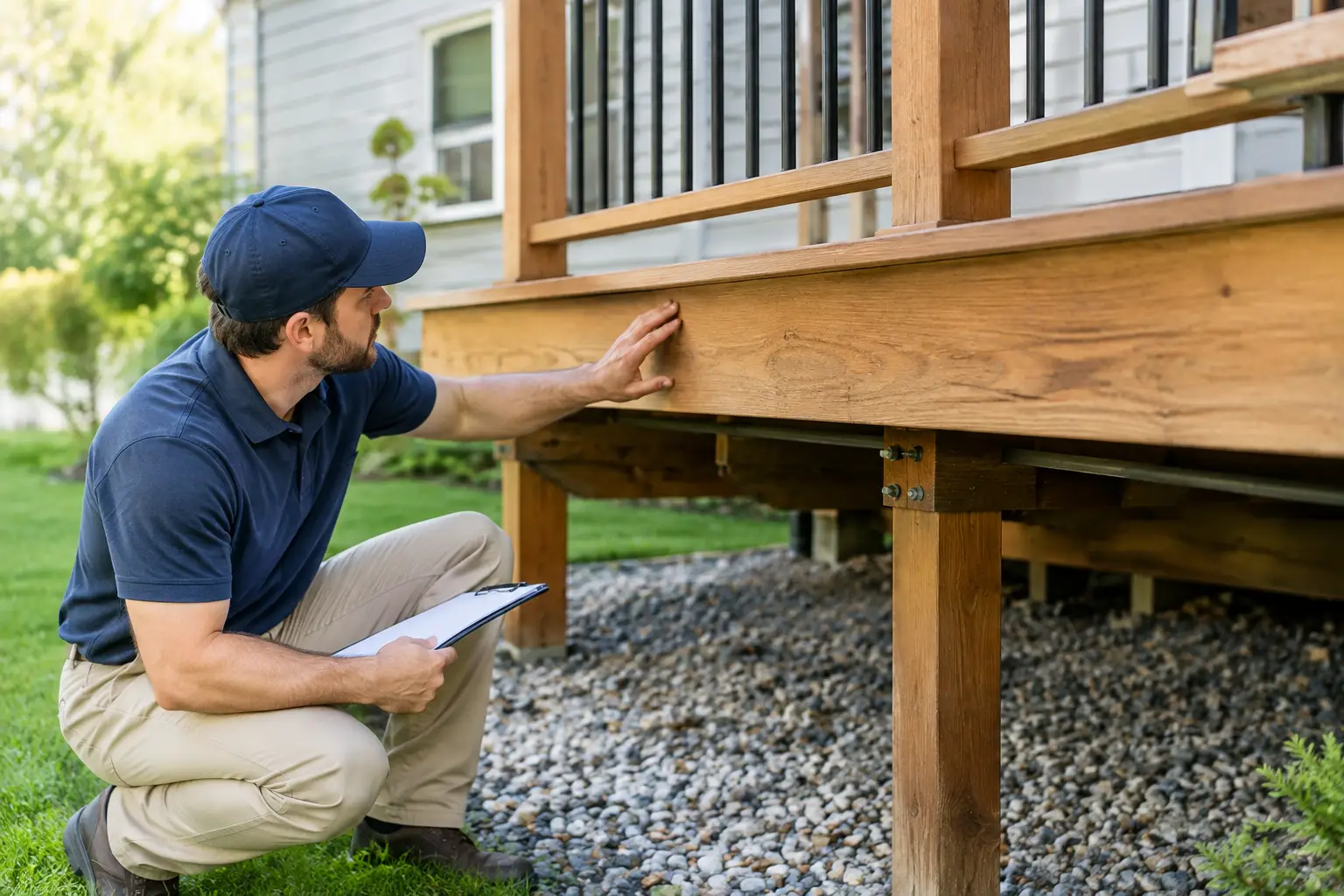
A deck can look beautiful from the yard and still hide problems where the structure meets the house, the footings meet the soil, or water collects after a hard Delaware rain. The right deck inspection questions help homeowners look past color and surface appearance to evaluate what truly matters: safety, durability, workmanship, and long-term value.
Whether you are evaluating an older deck, reviewing a newly completed project, or preparing to hire a contractor, an inspection should be more than a quick walk across the boards. It is your opportunity to understand how the deck was built, how it will perform through changing seasons, and who stands behind the work.
Deck Inspection Questions About Safety and Structure
1. How is the deck attached to the home?
The connection between the deck and your home is one of the most critical structural details. A properly installed ledger board must be securely fastened to sound framing, not merely attached through siding or veneer. It also needs proper flashing to direct water away from the home.
Ask the inspector or contractor to explain what is behind that connection. If water reaches the wall assembly over time, the concern is not limited to the deck. Moisture can damage the home’s framing and create a much larger repair project.
2. Are the footings deep enough and in good condition?
Deck posts depend on footings for stable support. In Delaware and southeastern Pennsylvania, footings must be installed below the local frost depth so seasonal freezing and thawing do not lift or shift the structure.
Look for signs of movement, including uneven stairs, gaps where the deck meets the home, leaning posts, or railings that no longer feel square. A deck that has settled may still appear usable, but its support system deserves a closer evaluation before cosmetic repairs are considered.
3. Are posts, beams, and joists properly sized and connected?
A well-built deck transfers weight through a clear structural path: decking to joists, joists to beams, beams to posts, and posts to footings. The size and spacing of those components should match the deck’s span, expected loads, and design features.
Ask whether hardware is rated for exterior use and whether structural connections use approved fasteners, bolts, brackets, and hangers. Nails alone are not the answer for many critical connections. Corroded, missing, or improperly installed hardware can weaken an otherwise solid-looking deck.
4. Does the deck have adequate lateral support?
Lateral support helps prevent a deck from pulling away from the home or shifting under use. This detail is easy to overlook because much of it is not visible from the finished deck surface.
An inspector should be able to identify the deck’s bracing and attachment methods. This question is particularly worthwhile for elevated decks, decks with heavy furniture, or structures designed for gatherings, grills, hot tubs, or outdoor kitchens. Added weight changes the engineering conversation.
Questions About Walking Surfaces, Stairs, and Railings
5. Are the deck boards secure, sound, and draining properly?
Check for loose boards, cracks, splintering, sagging, popped fasteners, and areas that hold water. On a wood deck, soft spots can indicate decay. On composite decking, the boards themselves are designed to resist rot and insect damage, but the framing below still requires attention.
Drainage matters on every deck. Boards should have consistent spacing so rainwater can pass through rather than remain trapped on the surface. Debris caught between boards or against the home can hold moisture where you least want it.
6. Do the stairs feel consistent and stable?
Stairs deserve their own inspection because they are where many deck-related falls happen. Each tread should feel secure, riser heights should be consistent, and the stair width should provide comfortable access. A wobbly stringer, loose tread, or uneven step is not a minor inconvenience.
Ask whether the stairs meet current code requirements, especially if the deck was built years ago. Existing decks are not always required to be rebuilt to every current standard, but any unsafe condition should be addressed. If you are planning a renovation, new work may trigger updated requirements.
7. Are railings at the correct height and firmly anchored?
Railings must do more than look finished. They need to resist pressure when someone leans against them, and their posts must be securely connected to the deck framing. Give the railing a careful push. Movement, looseness, or visible separation at the base deserves attention.
Ask about railing height, baluster spacing, handrails on stairs, and any areas where a child could climb or slip through. Modern rail systems can complement a premium deck design, but safety comes before style. Glass, cable, composite, and aluminum systems each have different cleaning and maintenance considerations as well.
8. Is lighting installed safely and positioned where it helps?
Deck lighting should make the space safer without creating glare. Stair risers, transitions, gate areas, and changes in elevation are practical locations for illumination. Inspect visible wiring, fixtures, transformers, and connections for damage or exposure.
Low-voltage lighting is a popular option, but it still requires thoughtful installation. Ask where wiring runs and how accessible it will be if a fixture or component needs service later. A polished nighttime appearance is valuable, but safe access is the first goal.
Questions About Water, Materials, and Workmanship
9. Where does water go when it leaves the deck?
Water management affects the deck, the house, and the yard below. Ask where runoff lands after it passes through the boards or comes off a covered section. Water should not repeatedly drain against the foundation, pool at the footings, or erode the grade beneath the deck.
For elevated decks, underdecking can create a dry patio area below. It must be installed with a planned drainage path, not treated as an afterthought. A finished ceiling beneath the deck may look impressive, but concealed leaks can be harder to locate if the drainage system is not correctly detailed.
10. Are the materials appropriate for the location and climate?
Not every material serves every project equally well. Pressure-treated framing remains common because it provides structural strength at a practical cost. Composite decking offers low-maintenance performance and lasting color, but it must be installed with the manufacturer’s required spacing, fasteners, and ventilation details.
Ask which materials are used for framing, decking, railings, fasteners, and trim, and why. For example, a shaded, damp property may need closer attention to airflow and debris management. A pool deck may benefit from a cooler color choice, slip-conscious design, and details that stand up to frequent moisture exposure.
11. Was the deck built to permit and manufacturer requirements?
Permits and inspections provide useful accountability, particularly for a new deck or major replacement. Ask whether permits were required, whether they were obtained, and whether the final inspection was approved. Keep that documentation with your home records.
For composite products, manufacturer instructions matter just as much as local building requirements. Correct joist spacing, approved fasteners, proper board gapping, and ventilation can affect appearance, performance, and warranty coverage. A contractor familiar with the specific product line should be ready to explain those details plainly.
12. What is covered after the project is complete?
A quality deck is a long-term investment, so the final question should focus on accountability. Ask what workmanship coverage the contractor provides, what manufacturer warranty applies, whether it is transferable, and what maintenance is expected from the homeowner.
Get the answers in writing. Also ask who will handle a concern after completion and whether the owner or project lead performs a final walkthrough. At Deck Masters, owner-supervised final inspections are part of the process because the finished deck should meet the same standard as the plans and materials that went into it.
When a Professional Deck Inspection Makes Sense
Homeowners can spot obvious warning signs, but a professional inspection is wise when the deck is older, elevated, visibly moving, showing signs of water damage, or being considered for a major upgrade. It is also useful before purchasing a home with an existing deck, especially when records are limited.
A professional can distinguish between a maintenance issue and a structural concern. Surface staining may call for cleaning. Loose railing posts, deteriorated ledger flashing, undersized framing, or shifting footings require a more serious response. The right solution depends on the condition of the deck, its age, its design, and how your family plans to use the space.
Do not wait for a loose board or unstable railing to decide the issue for you. Walk your deck with these questions in hand, pay attention after rainfall and seasonal temperature changes, and bring in a qualified deck professional whenever an answer is unclear. A secure, well-built outdoor space gives your family one less thing to worry about and many more reasons to step outside.