

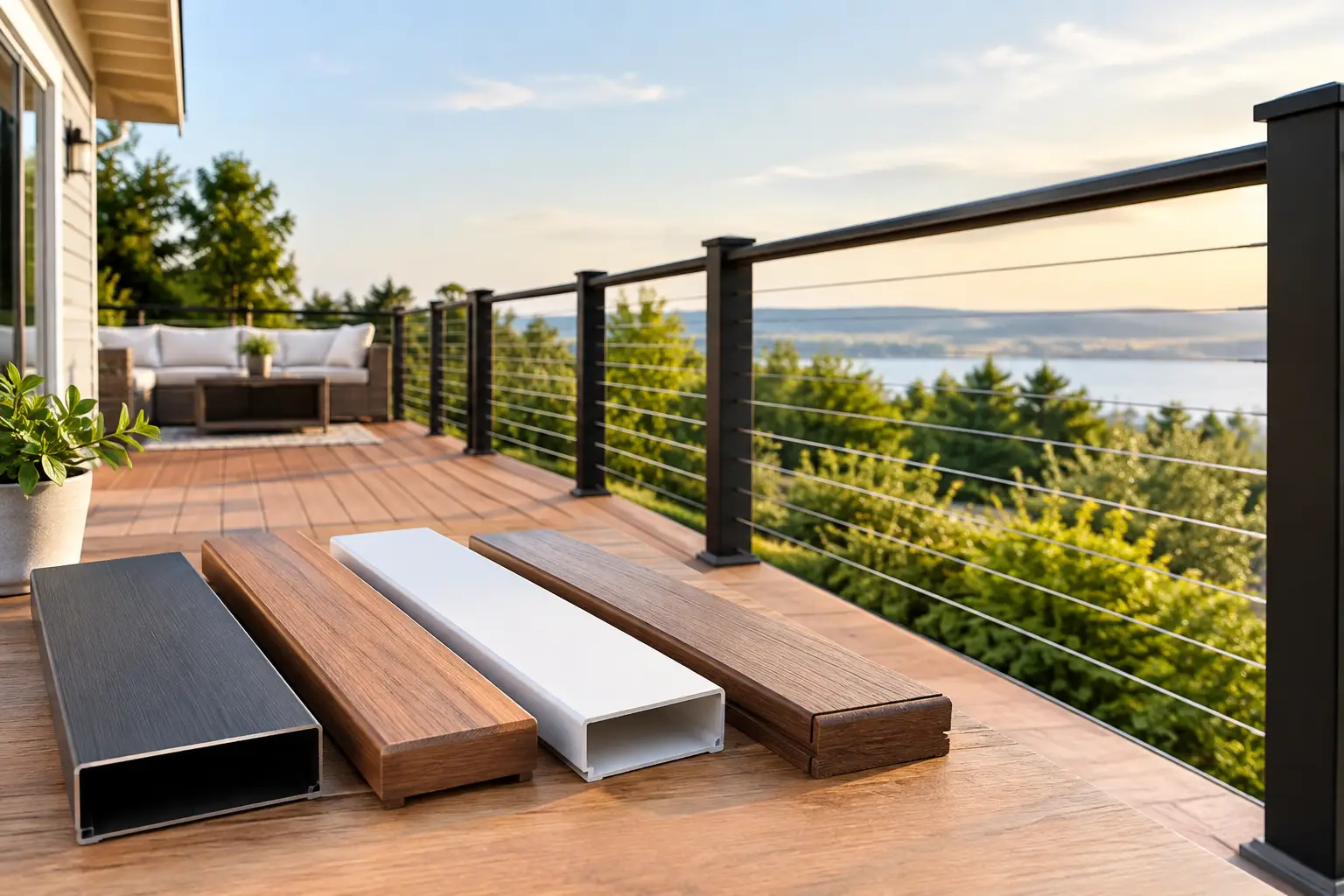
A railing does more than finish the edge of a deck. It shapes what you see from the house, how open the space feels, how safely children and guests move around it, and how much upkeep the deck will require through Delaware’s changing seasons. Choosing deck railing materials is therefore not a small final decision. It is a core part of planning an outdoor space that will look right and perform well for years.
A beautiful deck can lose its impact when the railing feels too heavy, clashes with the decking color, blocks a backyard view, or begins demanding frequent maintenance. The right system should complement the home, meet applicable safety requirements, and fit the way your family actually uses the space.
Start With Safety, Code, and the Deck Layout
Every railing decision begins with a secure structure. Residential deck railings are generally required when the walking surface is 30 inches or more above grade, but requirements can vary by municipality, property condition, and deck design. Railing height, baluster spacing, stair handrails, post attachment, and load resistance all matter.
This is not the place to choose a product based on a catalog photo alone. A railing system must be installed according to manufacturer specifications and local code requirements. Posts need proper blocking and fastening. Stair sections need careful layout. Gates, privacy panels, lighting, and drink rails may change the engineering of the system.
The deck’s shape also influences the best choice. A raised deck overlooking a wooded yard may call for a more open infill. A low platform deck around a pool may benefit from a railing that creates a clearer boundary without overwhelming the area. If the deck has several levels, wide stairs, or a screened porch transition, consistency across each section is especially important.
Choosing Deck Railing Materials for Long-Term Use
The best material depends on your priorities. Maintenance, budget, visual weight, privacy, sightlines, and the architecture of the home all deserve consideration. Here is how the most common choices compare.
Composite Railing
Composite railing is a natural choice for homeowners installing Trex composite decking or another low-maintenance deck surface. It creates a coordinated appearance, with options ranging from traditional white profiles to darker colors and more substantial Craftsman-style designs.
The biggest advantage is continuity. When the deck boards, fascia, stairs, and railing are designed as one system, the finished project looks intentional rather than pieced together. Composite railing also avoids the regular staining, sealing, and splinter concerns associated with wood.
There are trade-offs. Composite systems can have a more substantial visual profile than metal balusters or cable, which may matter when preserving a distant view is the top priority. They also represent a higher initial investment than basic pressure-treated wood railings. For many homeowners, however, the long-term appearance and lower maintenance make that investment worthwhile.
Composite railing works particularly well with traditional Delaware homes, covered porches, elevated decks, and outdoor living areas where the railing is meant to feel like a finished architectural feature.
Aluminum Railing
Aluminum railing offers clean lines, dependable strength, and a relatively open view. Black aluminum balusters remain a popular option because they provide contrast against lighter deck boards while visually receding into the landscape. Full aluminum railing systems can also suit contemporary homes, pool decks, and decks with scenic views.
Because aluminum does not rot, warp, or require painting like wood, it is a practical low-maintenance option. A quality powder-coated finish is designed to stand up to weather exposure, though it should still be cleaned periodically and checked for damage after impacts.
Aluminum tends to feel lighter and less traditional than composite railing. That can be an advantage for a modern deck design, but it may not be the right visual match for every colonial, farmhouse, or heavily detailed exterior. Pairing aluminum infill with a composite top rail is often an effective middle ground, combining a substantial handrail with more open sightlines.
Cable Railing
Cable railing is often requested for one clear reason: the view. Stainless steel cables create a minimal horizontal line that can make a deck feel less enclosed. On properties with water views, open fields, mature trees, or a carefully landscaped backyard, that difference can be dramatic.
Cable is not a shortcut to an invisible railing. The posts and top rail are still visible, and the system must be properly tensioned to meet spacing requirements. Over time, cable tension should be inspected, especially after seasonal changes. The horizontal lines can also be a concern for families with young children, since they may invite climbing more than vertical balusters do.
A professional installer can help determine whether cable railing is appropriate for the deck height, household needs, and local requirements. It is a premium design choice that delivers its best result when the view truly deserves to be the focal point.
Glass Panel Railing
Glass railing offers the clearest possible sightline while creating a polished, high-end appearance. It is especially effective around elevated decks, pool areas, and homes where a view is part of the property’s value.
The trade-off is maintenance and cost. Glass panels show pollen, fingerprints, water spots, and salt residue more readily than other railing materials. They need routine cleaning to retain their crisp appearance. The panels and hardware also require careful, exact installation, making this a system where experience matters.
For homeowners who want a refined barrier without visually breaking up the landscape, glass can be an excellent choice. For a busy household that prefers minimal cleaning, aluminum or composite may be a better fit.
Wood Railing
Wood railing is familiar, adaptable, and often the lowest-cost starting point. It can be painted or stained to match a home, and it suits certain traditional deck designs well. For a simple ground-level deck or a project where budget is the main driver, pressure-treated wood may make sense.
Its limitations become clearer over time. Wood is exposed to moisture, sun, insects, and seasonal movement. It can crack, twist, fade, or develop splinters. Maintaining it properly requires periodic cleaning, sealing, staining, or painting. If the deck itself is low-maintenance composite, a wood railing can create an ongoing maintenance task at the perimeter.
Wood is not the wrong choice. It simply needs to be selected with a realistic understanding of the care it will need in the years ahead.
Think About the View From Inside, Too
Homeowners often evaluate railing from the yard looking toward the deck. Just as important is the view from inside the house. Look through the doors and windows that open onto the deck. Where does the top rail land? Do balusters line up with a favorite view? Does a darker railing disappear visually, or does a light railing better frame the outdoor space?
This is one reason full-size showroom displays are valuable. Colors, textures, and railing proportions can look very different in person than they do on a screen. Holding a sample against the home’s siding, trim, brick, or stone often makes the right direction clearer.
Do Not Overlook Top Rails, Lighting, and Privacy
A railing system can do more than create a safety barrier. A wide cocktail rail cap provides a convenient surface for drinks, planters, and outdoor entertaining. It can make a deck feel more usable without adding furniture or crowding the floor space.
Low-voltage post-cap and stair lighting improves visibility after dark and adds a finished appearance. Privacy panels can block an unwanted neighbor view, define a hot tub area, or create shelter from wind without enclosing the entire deck. These additions should be planned early so their posts, wiring, and attachment details integrate cleanly into the build.
The best designs balance openness with purpose. A deck does not need the same railing treatment on every side. You may want a privacy panel near a neighboring property, a cocktail rail near the grill, and open aluminum balusters facing the backyard.
Match the Investment to the Whole Project
Railing is often priced separately from decking because there are so many choices in style, height, infill, and post details. It is tempting to cut costs here after investing in premium decking, but the railing is one of the most visible and heavily used parts of the project.
Consider the full ownership picture rather than only the initial price. Will you need to stain it? Will it coordinate if you add a pergola, underdecking, or a screened porch later? Does it preserve the features that made you want the deck in the first place? A well-chosen railing contributes to curb appeal, daily comfort, and buyer confidence if you eventually sell.
For more than 20 years, Deck Masters has helped homeowners make these decisions with real samples, practical design guidance, and installation methods built around manufacturer requirements. The goal is not to steer every project toward one railing style. It is to build the system that fits the home, the view, and the way the family plans to use the space.
Before making a final selection, stand where you will grill, relax, supervise children, and look out from the house. The right railing will feel secure under your hand, look like it belongs on the home, and let the rest of your outdoor living space do what it was designed to do: bring people outside more often.