

A deck can use the right Trex color and still look unfinished if the board edges, fasteners, and borders were not planned together. Trex board profiles determine how boards connect to the framing, where fasteners are placed, and how polished the completed deck appears from every angle.
For Delaware homeowners, this is more than a cosmetic choice. A properly selected board profile supports a cleaner walking surface, a secure installation, and details that hold up through humid summers, rain, snow, and daily family use. The best answer is usually not one profile throughout the entire deck. It is a thoughtful combination designed around the layout.
What Trex Board Profiles Mean
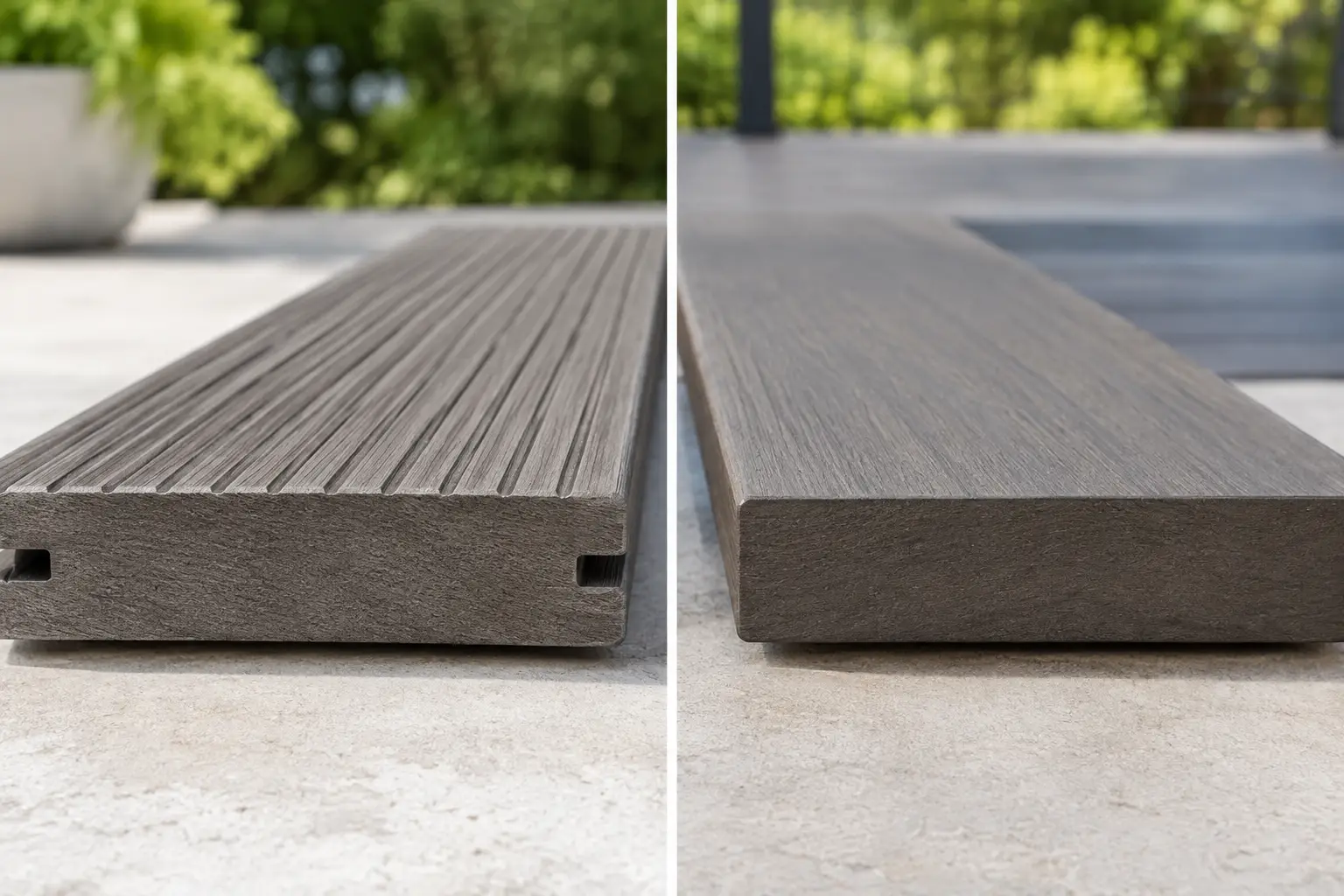
In composite decking, a board profile generally describes the edge treatment of the decking board. The two profiles homeowners will encounter most often are grooved-edge boards and square-edge boards.
Grooved boards have channels cut into both sides. Those channels accept compatible hidden fasteners, which attach the decking to the joists without placing visible screws through the face of every board. The result is a clean, uniform surface that lets the color, grain pattern, and layout take center stage.
Square-edge boards have solid, flat sides without fastening grooves. They are commonly secured with color-matched face screws or other approved fastening methods. Although some homeowners assume square-edge boards are a lesser option, they serve an essential purpose in a well-built deck. They make clean borders, picture frames, stair details, and certain transition areas possible.
The specific board sizes, colors, and available profiles can vary by Trex collection. That is why material selection should happen alongside the deck design, not after the framing plan has already been set.
Grooved Trex Boards for a Clean Main Deck Surface
For the majority of a deck field – the broad area where people walk, gather, and place furniture – grooved boards are often the practical choice. Hidden fastening systems fit into the side grooves and are secured to the framing below. Rather than seeing rows of screw heads, homeowners see consistent board spacing and a more refined surface.
That clean appearance matters on a premium outdoor-living project. It is especially noticeable on decks that lead directly from a kitchen, family room, or screened porch, where the outdoor space becomes an extension of the home.
Grooved boards also help installers maintain appropriate spacing from one course of decking to the next when used with the recommended fastening system. Proper spacing allows water, leaves, and debris to move through the deck surface instead of collecting between boards. In Delaware’s wet and humid conditions, drainage and airflow are details worth getting right.
There are trade-offs. Hidden fasteners are part of a complete installation system, not a shortcut. The framing must be sound, joists must be properly spaced, and the fastener system must be installed according to manufacturer specifications. A hidden-fastener deck only looks clean for the long term when the work below the boards is just as carefully executed as the surface above.
Where Square-Edge Trex Boards Belong
Square-edge boards are frequently used where a deck needs a finished visual boundary or where a hidden fastener cannot provide the right attachment. A picture-frame border is the most familiar example. This border runs around the outside of the deck field, outlining the grooved boards inside it and giving the project a deliberate, custom appearance.
Square-edge boards are also useful around posts, along angled sections, at complex transitions, and on stair treads. Stairs receive concentrated foot traffic and need careful fastening and dependable support. In these locations, visible fasteners may be the correct construction choice, particularly when they are color-matched and installed cleanly.
A good installation does not treat face fastening as an afterthought. Screw placement should be straight, consistent, and appropriate for the board and application. The goal is not to hide every fastener at any cost. The goal is to use the correct fastening method in every location while preserving a polished finished look.
Square-edge boards can also be valuable when a design includes contrasting colors. A darker border around a lighter deck field, for example, can define the deck perimeter, make stairs easier to see, and coordinate with railings or cocktail rail caps. It is a small detail that can make a standard rectangular deck feel much more tailored to the home.
Trex Board Profiles and Deck Layout Work Together
The profile choice should follow the deck layout, not the other way around. A simple platform deck may need a straightforward grooved field with a square-edge perimeter. A multi-level deck with wide stairs, diagonal decking, privacy panels, and railing posts requires more planning before the first board is cut.
Diagonal layouts are a good example. They create movement and visual interest, but they can require closer joist spacing than boards installed perpendicular to the framing. The board profile remains important, yet the framing plan, fastening approach, and perimeter details must all work together. Choosing materials first and solving these details later can lead to unnecessary cuts, inconsistent gaps, or an awkward border.
The same is true for decks around pools, patios, and covered structures. A profile may need to transition neatly into a picture frame, a drainage edge, a stair landing, or a post wrap. These are the details that separate a deck that simply fills a space from an outdoor living area that looks planned from the ground up.
Do Not Confuse Decking Profiles With Structural Strength
Trex decking is designed as a deck surface, not as a replacement for properly engineered framing. Whether a board is grooved or square edge does not change the need for correctly sized joists, beams, footings, hangers, and connections.
This distinction matters when homeowners are comparing estimates. A deck can look attractive on installation day but develop noticeable movement, uneven lines, or fastening issues if the structure below is not built to support the chosen layout. Proper framing, approved fasteners, adequate ventilation, and attention to manufacturer requirements protect both the appearance of the deck and the warranty coverage tied to the product.
A professional contractor should inspect the site, consider how the deck will be used, and account for features such as railings, stairs, built-in seating, pergolas, or underdecking before finalizing the material plan. Those choices affect loads, attachment details, and the board layout at the edges.
Choosing the Right Profile Combination
Most homeowners do not need to memorize every Trex product specification before starting a project. They do need an installer who can explain why a particular profile is being used in each area. During a design consultation, the conversation should cover the desired board collection and color, deck direction, border treatment, stair design, rail system, and how the new structure meets the existing home and yard.
It also helps to see full-size material displays rather than making a decision from a small sample alone. Texture, color variation, border contrast, and the appearance of concealed versus face-fastened areas are easier to judge when you can view them in a realistic setting.
At Deck Masters, LLC, profile selection is part of the construction plan, not a last-minute material decision. As a TrexPRO Platinum Installer serving Delaware and nearby Southern Chester County, the team builds each deck around secure framing, manufacturer-aligned installation practices, and the details homeowners will appreciate every time they step outside.
The right Trex board profile combination should make the craftsmanship feel effortless: clean deck lines underfoot, secure stairs at every level, and finished edges that look as intentional ten years from now as they do on the day your deck is completed.