

A composite deck should make weekends easier, not add another demanding maintenance project to the calendar. Still, pollen, tree debris, muddy footprints, sunscreen, spilled food, and Delaware’s humid summer weather can leave even a premium deck looking dull. Knowing how to clean composite decking correctly protects its finish while keeping the outdoor space your family worked hard to create ready for company.
The good news is that most composite decking needs only a gentle wash several times a year. The key is using the right tools, cleaning spills before they set, and avoiding aggressive methods that can scratch or scar the surface. A careful routine preserves the color, texture, and polished appearance that make composite decking such a smart long-term choice.
Start With Your Decking Manufacturer’s Care Instructions
Composite decking is not all made the same way. Many newer boards have a protective outer shell designed to resist staining and fading, while older or uncapped composite products may have different cleaning requirements. Trex decking, for example, has product-specific guidance based on the board generation and surface finish.
Before applying any cleaner, identify your deck material and read the manufacturer care instructions for that specific product. This matters most when dealing with mold, grease, rust, tannins from wet leaves, or a stubborn stain. A cleaner that is appropriate for one composite board may not be the best choice for another.
If your deck is newly installed, remove construction dust and everyday debris promptly, but do not assume every cleaner in the garage is safe. Paint removers, strong solvents, harsh degreasers, and unapproved chemicals can affect the board surface or create a problem that warranty coverage may not address.
What You Need to Clean Composite Decking
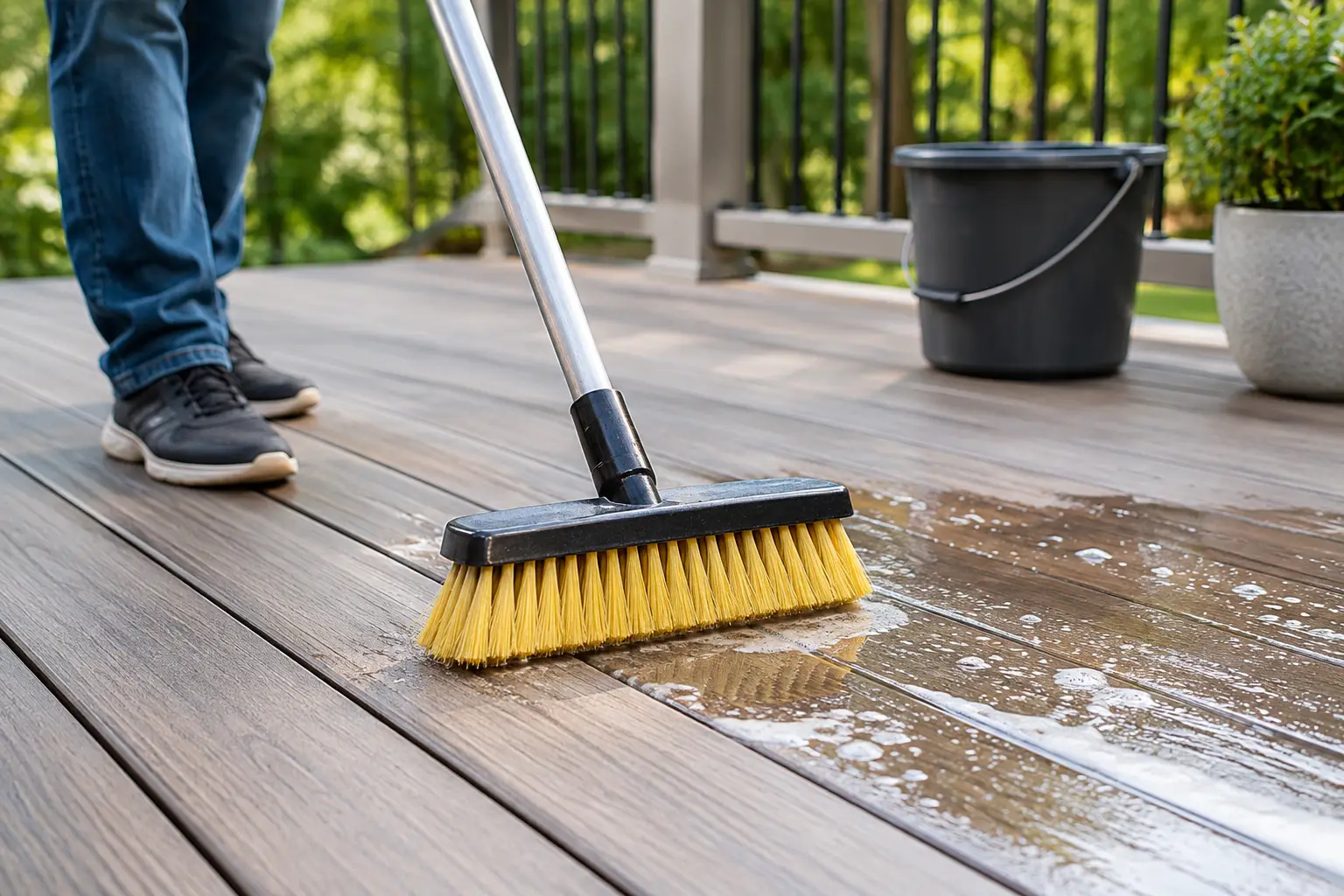
For routine cleaning, simple supplies are usually enough. Gather a garden hose, a soft-bristle deck brush, a bucket, warm water, and a mild dish soap or manufacturer-approved composite deck cleaner. A broom or leaf blower is useful for clearing the surface first.
Avoid wire brushes, steel wool, and abrasive scrubbing pads. They may seem effective in the moment, but they can leave visible scratches that collect dirt and are difficult to correct. Use a brush with synthetic bristles and a little patience instead.
A pressure washer can be helpful in limited situations, but it is not the first tool we recommend for regular cleaning. Too much pressure, a narrow spray tip, or holding the nozzle too close can damage composite boards. If your manufacturer permits pressure washing, use a fan tip, keep the pressure low, and maintain a safe distance from the deck surface. When in doubt, clean by hand.
How to Clean Composite Decking Step by Step
Choose a mild day when the deck is cool to the touch. Cleaning in direct, hot sun can cause soapy water or cleaner to dry too quickly, leaving residue behind. Move furniture, planters, and rugs off the deck so you can clean the entire surface and inspect the areas that are usually hidden.
Start by sweeping away leaves, twigs, dirt, and debris from the boards and gaps. Pay particular attention to spaces between deck boards, along the house, around posts, and beneath railings. Trapped organic material holds moisture against the deck and can encourage mildew growth, especially in shaded locations.
Rinse the deck with a garden hose to loosen surface dirt. Then mix mild soap and warm water in a bucket according to the cleaner directions. Work in manageable sections, applying the solution and gently scrubbing in the direction of the board grain. You do not need to scrub aggressively. The goal is to lift grime from the textured surface, not scour the deck.
Do not let the cleaning solution dry on the boards. Rinse each section thoroughly before moving on, then check the surface from different angles for missed spots. A final rinse removes loosened dirt and soap residue, leaving the boards clean rather than cloudy.
Allow the deck to dry fully before replacing furniture or rugs. If you use an outdoor rug, select one that allows airflow and does not trap moisture beneath it. Periodically move the rug and clean below it, especially after long stretches of wet weather.
Treat Spills and Stains Before They Become Permanent
Composite decking is designed to resist many common outdoor stains, but resistance is not the same as immunity. The best approach is simple: clean spills as soon as practical. A quick rinse and gentle soap-and-water wash can prevent a small accident from becoming a weekend project.
For food, grease, or barbecue drips, use warm water and a mild dish soap first. Gently scrub with a soft brush, then rinse well. Do not reach for a solvent or highly concentrated cleaner unless the decking manufacturer specifically recommends it for that type of stain.
Leaf stains and pollen are common around mature trees. Sweep away wet leaves promptly, because natural tannins can discolor any outdoor surface when they sit for too long. If a stain remains after a standard wash, use an approved composite deck cleaner and follow its directions exactly. Test an inconspicuous area first when you are unsure how the material will respond.
Mildew can appear as dark spots or a film in damp, shaded areas. It often grows on surface dirt, pollen, and debris rather than in the composite material itself. Clean the deck thoroughly, improve airflow where possible, and keep the gaps between boards clear. If mildew repeatedly returns, look for conditions that keep the area wet, such as a leaking gutter, dense landscaping, or a rug that holds water.
Rust marks, paint, adhesive, and hard-water deposits require more caution. These are not problems to attack with scraping tools or random household chemicals. Consult the decking manufacturer’s current stain-removal guidance, especially if your deck has a protective cap. The wrong method can create a larger, more visible issue than the original stain.
Seasonal Care Keeps a Deck Looking Its Best
A clean deck starts with regular housekeeping. During spring and fall, clear leaves and debris from the boards, stair treads, railing bases, and drainage paths. In summer, rinse off pollen, dust, and splash residue from pools or planters. After winter, inspect the surface before outdoor season begins.
Look beyond the deck boards while you clean. Check railing connections, stair lighting, fasteners, skirting, and the area where the deck meets the home. Composite decking is low maintenance, but the complete structure still benefits from a trained eye and occasional inspection. Water should drain away from the house, and no debris should block airflow beneath the deck.
For snow and ice, use a plastic shovel with the edge held parallel to the deck boards. Avoid metal-edged shovels that can gouge the surface. Use only ice-melt products approved for your decking material, and rinse away residue once conditions allow. Sand can improve traction, but it should be swept away when the weather clears so it does not grind into the surface under foot traffic.
When a Cleaning Problem Points to a Larger Issue
Most discoloration is cosmetic and responds to proper cleaning. However, standing water, recurring mildew, loose railings, movement in stairs, or boards that appear improperly spaced may indicate a drainage or installation concern. Cleaning is the perfect time to notice these details before they become more costly repairs.
A professionally designed composite deck should account for ventilation, drainage, board spacing, secure fastening, and the way the deck connects to your home. Those details affect not only how the deck performs but also how easy it is to care for over the years. Deck Masters builds Trex outdoor living spaces with long-term performance in mind, from the structure beneath the boards to the finishing details homeowners see every day.
The best deck-cleaning routine is the one you can keep: clear debris often, wash gently when the seasons change, and deal with spills while they are still fresh. As you rinse the last section, take a minute to look closely at your deck. That small habit helps protect a space built for family dinners, quiet mornings, and many seasons outdoors.