

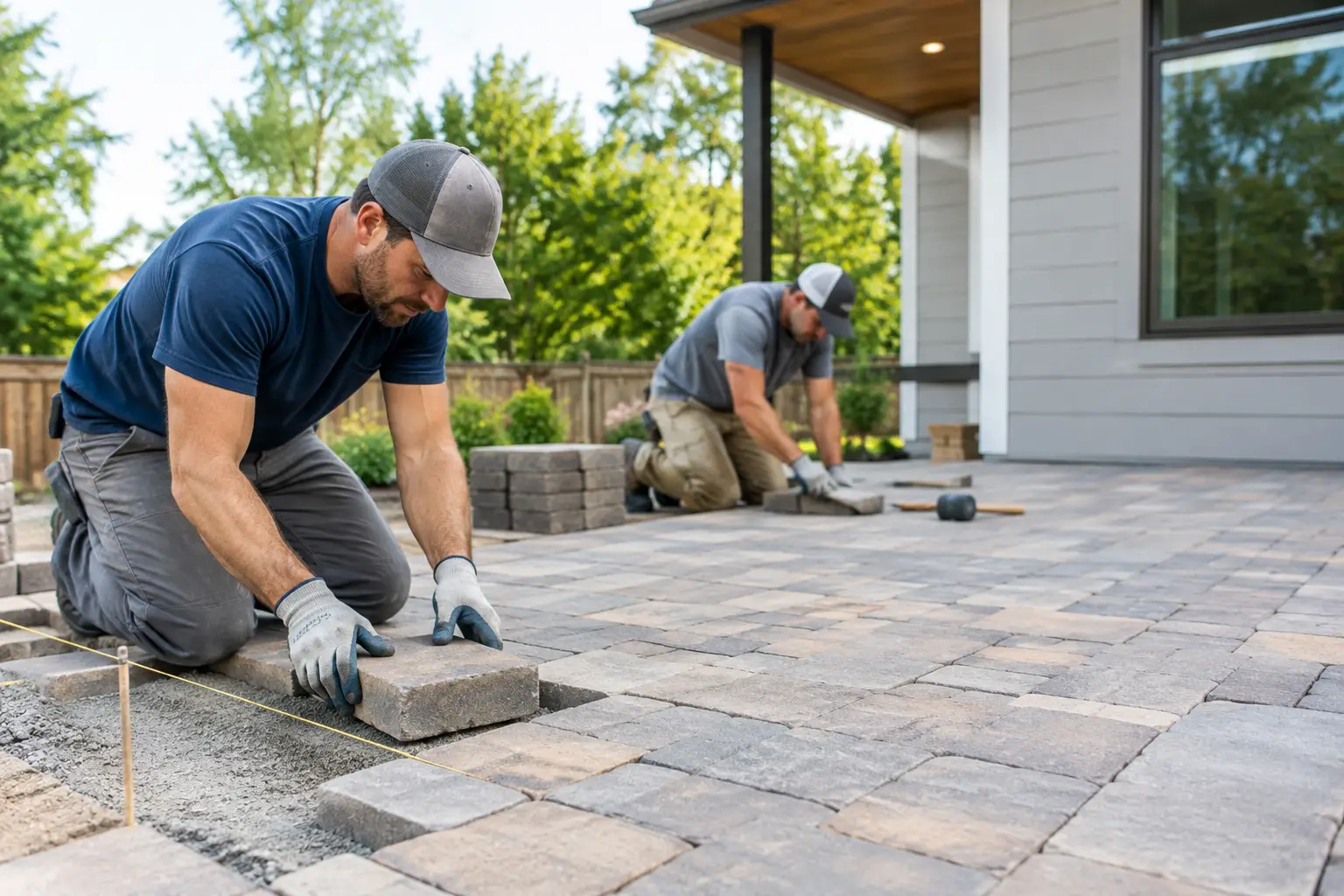
A beautiful patio can make an overlooked backyard feel like part of the home. It can create a dependable place for family dinners, quiet mornings, poolside seating, and weekends with friends. But the finished pavers or concrete are only the visible layer of the project. The patio installers you choose determine whether that space drains properly, remains stable through seasonal weather, and continues to look right years after the final cleanup.
For Delaware homeowners, that distinction matters. Our weather brings heavy rain, freeze-and-thaw cycles, humidity, and changing soil conditions. A patio built without the right base preparation or slope may look excellent at first, then settle, hold water, or develop uneven areas. A professional installation is not simply about putting materials in place. It is about building a long-term outdoor living area from the ground up.
What Experienced Patio Installers Should Evaluate First
A contractor should not begin by discussing color alone. Design choices are important, but a responsible patio consultation starts with the property itself. The existing grade, soil, drainage paths, access to the backyard, nearby structures, and intended use all affect the recommended design and construction method.
Water is one of the first considerations. A patio needs a deliberate slope that moves water away from the house rather than directing it toward the foundation. That slope must be subtle enough to feel comfortable underfoot while still doing its job during a hard rain. Existing downspouts, low areas in the yard, and the elevation at exterior doors all deserve attention before excavation begins.
The intended use also changes the plan. A small seating patio may need a very different layout than a large entertaining area with a grill station, fire feature, dining table, and pathways to a pool or deck. Homeowners often benefit from thinking about how people will move through the space, not just how it will look in a photograph. Clear walking routes and properly sized zones make a patio easier to enjoy every day.
The Base Is Where Long-Term Performance Begins
Whether a patio is built with pavers or concrete, the ground below the surface carries the real responsibility. Loose or poorly compacted material can allow movement that eventually shows up as shifting pavers, low spots, cracks, and drainage problems.
For a paver patio, a proper installation generally involves excavation, a compacted aggregate base, bedding material, carefully set pavers, edge restraint, and joint sand. Each layer has a purpose. The base provides support, the bedding layer helps establish a consistent finished surface, and the edge restraint helps prevent the field of pavers from spreading over time.
Concrete patios require equally careful preparation. The contractor should address subgrade conditions, reinforcement where appropriate, thickness, control joints, and the planned finish. Concrete is durable and can provide a clean, tailored appearance, but it is not immune to movement or cracking. Good preparation and smart joint placement help manage that reality. Homeowners should be cautious of anyone who promises that exterior concrete will never crack. The better promise is thoughtful construction that accounts for normal material behavior and local conditions.
Choosing Between Pavers and Concrete
There is no single best patio material for every home. The right choice depends on the property, budget, architectural style, maintenance preferences, and the way the family expects to use the area.
Pavers offer design flexibility. They are available in a broad range of shapes, colors, textures, and patterns, making them a strong option for homeowners who want a customized look. Individual pavers can also be lifted and reset if access to underground utilities is ever needed or if a localized area settles. That repairability is a meaningful advantage over a large continuous slab.
Concrete can be an excellent choice for a more streamlined design or for homeowners who prefer a continuous surface. It may be finished in several ways, including broom-finished, stamped, or decorative applications. The trade-off is that repairs can be more visible, particularly when matching an older slab’s color and finish. A contractor should explain those differences clearly rather than steering every homeowner toward the same material.
The transition to other outdoor features deserves equal consideration. A patio may meet a Trex deck, a screened porch, a pergola, a pool area, or an exterior doorway. Matching elevations and materials at those connection points improves both appearance and safety. It also prevents the patio from feeling like an isolated square placed in the middle of the yard.
Questions to Ask Patio Installers Before You Sign
A detailed proposal should give you confidence, not leave you guessing. Price is important, but a low number without a clear scope can become costly when essential preparation or finishing details are missing.
Ask how deep the excavation will be, what base materials will be used, and how the base will be compacted. Ask how the patio will drain and where water will go after it leaves the surface. If the patio is near the home, ask how the finished elevation will relate to the siding, door thresholds, and foundation.
It is also reasonable to ask who will perform the work, whether the contractor is licensed and insured, and who will supervise the project. Clear communication matters during construction. Homeowners should know what to expect for access to the yard, equipment placement, daily cleanup, material delivery, and the timeline for completion.
A dependable contractor will also discuss the details that are easy to overlook at the beginning: edging, steps, retaining needs, downspout extensions, lighting, and landscaping restoration. Those items can have a major effect on the completed space. They should not become surprises after work is underway.
A Patio Should Be Designed for How You Live
The most successful patio designs are practical before they are decorative. A grill needs a safe, usable location with enough room to cook and move around. A dining table needs clearance for chairs. A fire feature needs appropriate spacing from structures and comfortable seating around it. If the patio will serve children, grandparents, or guests with mobility concerns, smooth transitions and well-planned steps become especially valuable.
Shade is another consideration. Full sun can be welcome in spring and fall but difficult during a hot Delaware afternoon. A pergola, covered structure, shade feature, or a patio location that works with existing trees can make the area more comfortable without sacrificing its open-air appeal. Lighting extends the patio’s usefulness after sunset and improves safe travel between the house, deck, and yard.
Homeowners do not need every feature on day one. A well-designed patio can be planned in phases, with future lighting, a pergola, or a deck connection considered before the first paver is installed. That foresight can prevent expensive rework later.
Why Accountability Matters on a Patio Project
A patio is a permanent improvement to your property, not a temporary backyard purchase. That is why professional standards matter as much as visual style. Experienced contractors provide a defined scope, use materials suited to the application, protect the work area, and inspect the finished project with the homeowner.
At Deck Masters, LLC, patio construction is approached as part of the complete outdoor-living environment. That means looking beyond the surface to drainage, access, connections to decks or porches, and the features that will make the area more useful for the family. Owner-supervised quality control helps ensure the finished work reflects the plan discussed before construction began.
Before making a decision, visit a showroom if one is available, review completed work, and take time to compare proposals based on what is included. The right contractor will welcome informed questions because a patio should be built on clear expectations as well as a solid base.
Your backyard should give you more reasons to spend time outside, not more repairs to worry about. Start with a design conversation that considers your property, your plans, and the construction details that will protect your investment for years to come.