

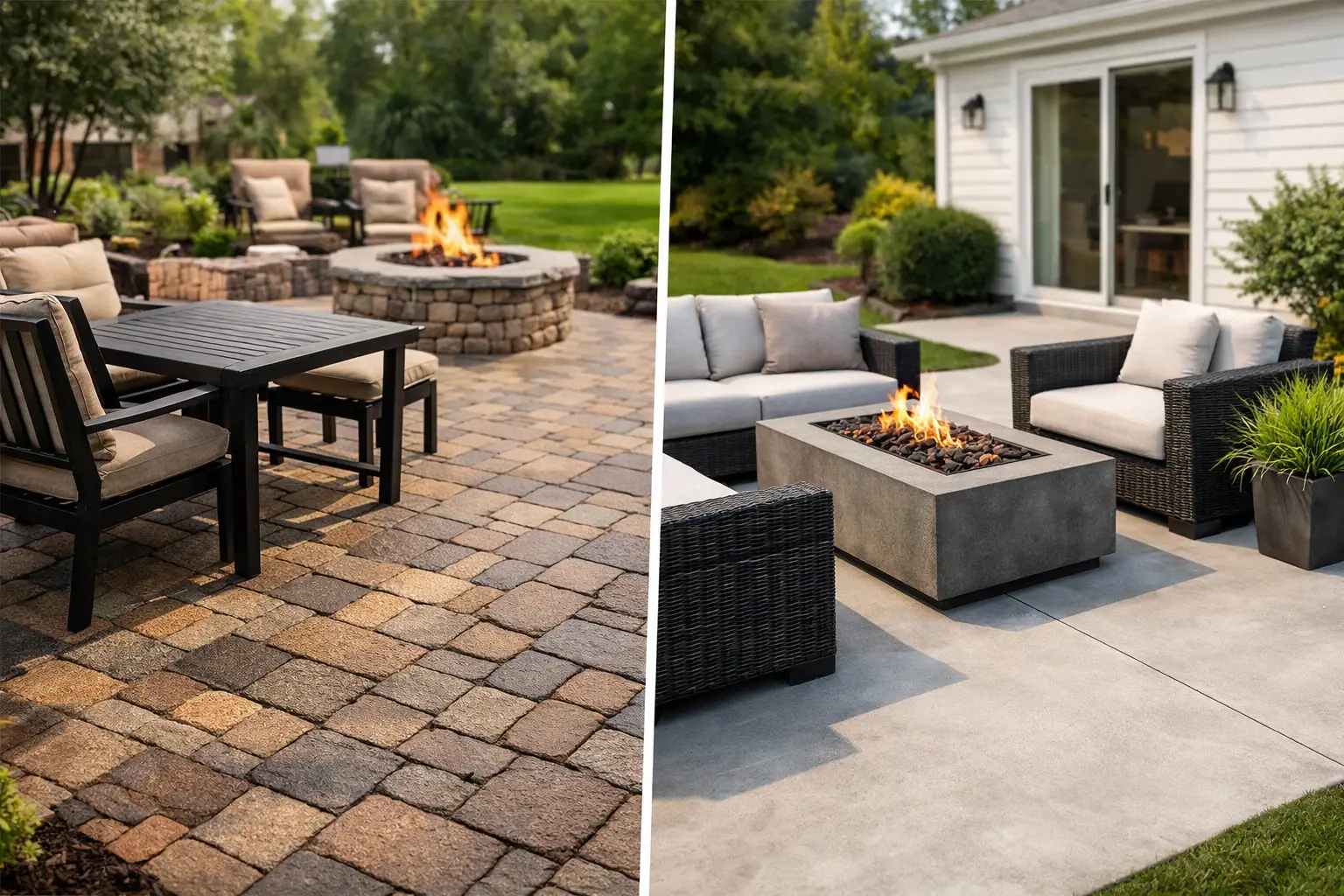
A patio has to do more than look good on installation day. It needs to handle Delaware’s freeze-thaw cycles, summer cookouts, foot traffic, furniture, rain, and the occasional dropped grill tool without becoming a constant repair project. When homeowners compare a paver patio vs concrete patio, the better choice depends on how they plan to use the space, their design goals, and how much flexibility they want over the years ahead.
Both materials can create a beautiful, functional outdoor living area. The difference is in how they are built, how they age, and what it takes to keep them looking their best. A well-designed patio begins with proper base preparation, drainage planning, and professional installation – not simply the surface material selected.
Paver Patio vs Concrete Patio: The Core Difference
Concrete patios are poured as one continuous slab. They can be finished in a smooth, broomed, stamped, or colored surface and are often chosen for their clean appearance and straightforward installation process. Because concrete is monolithic, it creates a solid, uninterrupted plane for outdoor furniture, dining areas, and walkways.
Paver patios are built from individual units set over a carefully prepared compacted base. They are available in concrete, natural stone, and porcelain options, with a broad range of colors, sizes, patterns, and edge details. The joints between pavers provide visual texture, but they also allow the system to move slightly with changing ground conditions.
That distinction matters in our region. Soil movement, seasonal moisture, and freezing temperatures can place stress on any exterior surface. A quality installation accounts for those realities before the first paver is laid or the first truck of concrete arrives.
Appearance and Design Flexibility
For homeowners who want a patio that feels customized to the home, pavers typically offer more design freedom. A paver field can be laid in herringbone, running bond, basket weave, or other patterns. Borders can define the space, frame a fire pit, or coordinate with a pool area, retaining wall, porch, or deck stairs. Multiple colors and paver sizes can add detail without making the yard feel busy.
Pavers also work especially well when a patio is part of a larger outdoor-living plan. They can transition naturally from a Trex deck to a seating area, walkway, pergola, outdoor kitchen, or garden edge. The result can feel intentional rather than like a separate slab added behind the house.
Concrete offers a more streamlined look. A simple broom-finished patio can complement a modern home, and stamped concrete can imitate stone, slate, brick, or wood. However, stamped finishes do not offer the same individual-unit depth or pattern flexibility as pavers. Color can also fade over time, particularly in areas exposed to direct sun and weather.
Durability Through Delaware Weather
Concrete is strong, but cracking is a realistic concern. Control joints are placed in a slab to encourage cracks to occur in planned locations, yet they cannot guarantee a patio will remain crack-free forever. Settlement, roots, poor drainage, and freeze-thaw conditions can all contribute to cracking. Once a crack appears, it is usually visible, even if it can be repaired or filled.
Pavers are not immune to movement, but they manage it differently. Individual pavers can shift slightly without creating one long, obvious fracture through the whole surface. If a small section settles or becomes damaged, the affected units can often be lifted, the base corrected, and the pavers reset. That repairability is one of the strongest practical advantages of a paver patio.
The key word is “properly.” A paver patio built on an inadequate base can settle, hold water, or develop uneven spots. A concrete slab poured over poorly prepared ground can crack prematurely. Material quality matters, but craftsmanship below the surface matters just as much.
Drainage Is Part of the Patio Design
Water should move away from the house and not collect along the foundation, under a deck, or in low spots around the patio. A professional design establishes the correct pitch while considering downspouts, existing grades, doors, steps, and nearby landscaping.
Paver joints can allow some water to pass through the surface, depending on the system used. Traditional pavers still require proper base drainage, while permeable paver systems are specifically designed to manage runoff through wider joints and layered stone below. Concrete sheds water across its surface, so its slope and drainage path must be planned with particular care.
Cost: Initial Price and Long-Term Value
A standard concrete patio is often less expensive upfront than a paver patio of the same size. It uses fewer individual materials and may require less labor for a basic finish. For a homeowner who wants a simple, durable surface for a modest seating area, concrete can be a sensible investment.
Pavers generally cost more at installation because of the excavation, aggregate base, bedding layer, edge restraints, compaction, and hands-on placement involved. Specialty patterns, borders, curves, and premium paver selections can increase the investment further.
Initial price, however, is not the complete picture. A cracked or settled concrete slab can be difficult to restore without visible repair lines or replacement of a larger section. Pavers usually make localized repairs more practical. They also give homeowners more opportunities to update an outdoor space later by extending the patio, revising a border, or incorporating another feature.
For many established homeowners, the choice comes down to priorities. If a polished, highly tailored backyard and future flexibility are important, pavers often justify the higher initial cost. If the plan calls for a clean, uncomplicated surface with a lower starting investment, concrete may be the right fit.
Maintenance Expectations
Neither option is truly maintenance-free, but both are manageable when installed correctly.
Concrete should be kept clean and sealed as recommended for its finish. Sealing can help protect against stains, moisture, and surface wear, especially with stamped or colored concrete. Avoid harsh de-icing products during winter, since some products can damage concrete surfaces. Small cracks should be addressed early to limit water intrusion and further deterioration.
Paver patios benefit from periodic cleaning, joint-sand maintenance, and occasional resealing if the selected paver and finish call for it. Over time, some homeowners choose to refresh polymeric sand in the joints to discourage weeds and help keep the units stable. If a paver becomes stained, chipped, or damaged, replacing that individual unit is typically far simpler than repairing a portion of a poured slab.
The maintenance question is not simply which option requires less work. It is also which type of maintenance a homeowner would rather manage. Concrete usually needs attention at cracks and surface wear. Pavers need occasional joint and leveling attention, with the advantage of more targeted repairs.
Comfort, Furniture, and Everyday Use
For outdoor dining, both surfaces perform well when level and properly finished. Concrete creates a very smooth base for chairs and tables. Pavers can be equally stable, although highly textured pavers or wide joints may be less ideal for furniture with narrow legs.
Surface temperature is another consideration. Dark pavers and dark-colored concrete can absorb significant heat in direct sunlight. Lighter colors, partial shade, a pergola, or a covered structure can make the patio more comfortable during Delaware summers. Around pools, homeowners should also consider slip resistance and how bare feet will feel on the chosen surface.
If the patio will support a fire pit, grill station, hot tub area, or outdoor kitchen, the layout should be designed around those uses from the start. Adequate clearance, traffic flow, drainage, and utility needs are much easier to address before construction than after the patio is complete.
Which Patio Is Right for Your Property?
Choose pavers when design detail, repairability, and long-term flexibility are high priorities. They are an excellent choice for homeowners who want custom borders, curved shapes, coordinated hardscaping, or a patio that can grow with future backyard improvements.
Choose concrete when you prefer a simpler appearance, want to control upfront costs, and are comfortable with the possibility of crack repair over time. A professionally installed concrete patio can be an attractive, dependable foundation for outdoor living.
The right answer should account for your yard’s slope, drainage, sun exposure, access for construction equipment, architecture, and how your family actually spends time outside. At Deck Masters, we help homeowners evaluate those details before recommending a patio solution, because secure construction and a finished appearance both start with a sound plan.
Before choosing a surface, stand in the part of the yard where the patio will live and picture the daily use of the space: morning coffee, family dinners, a quiet fire, kids coming in from the pool, and guests moving between the house and the backyard. The patio that supports those moments – while fitting your home and being built on the right base – is the one worth investing in.