

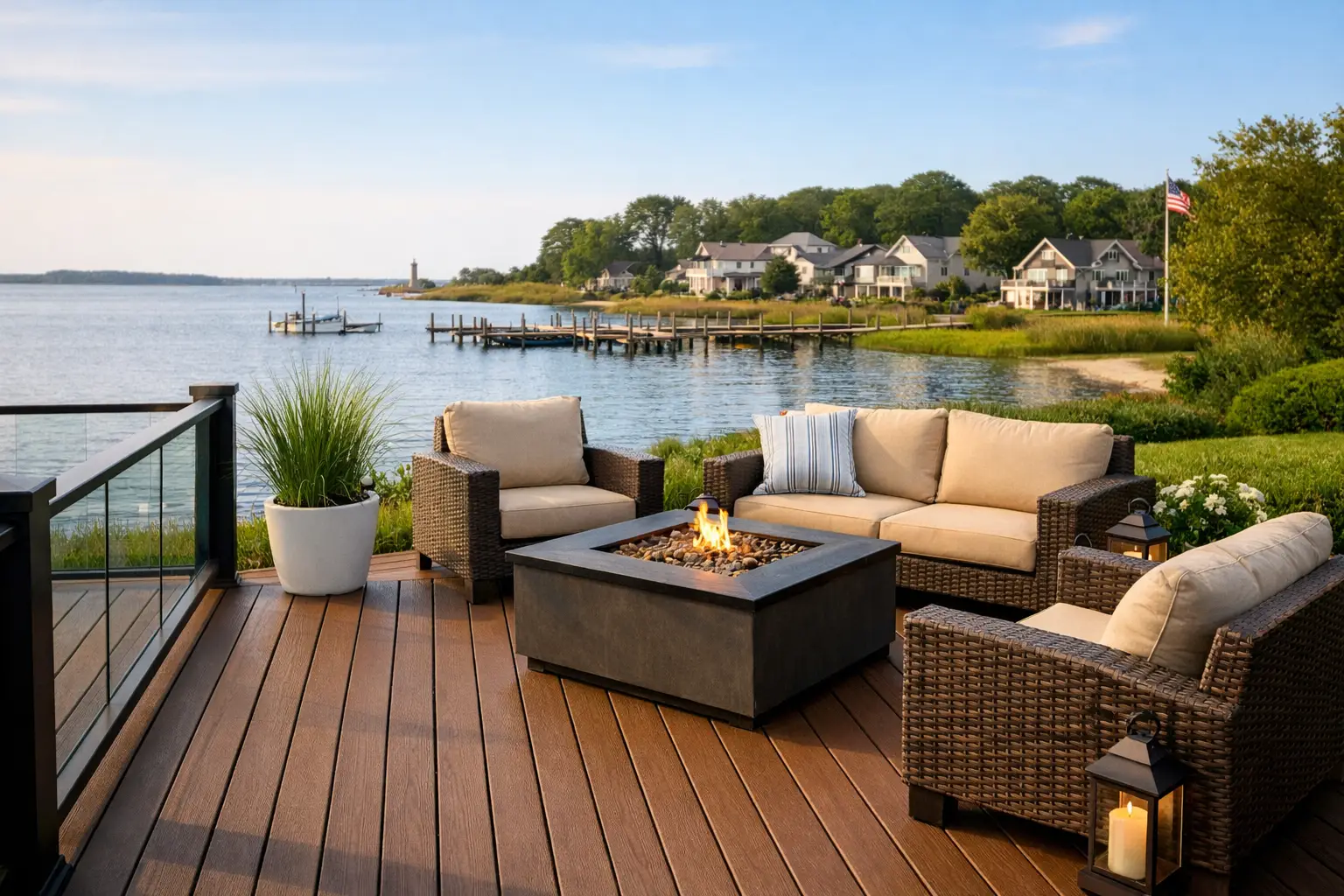
A wood deck can look terrific the day it is finished, then begin asking for attention almost immediately. Between Delaware humidity, wet springs, summer sun, and leaves collecting in every corner, many homeowners reach the same question: is Trex decking worth it when the initial price is higher than pressure-treated lumber?
For a homeowner planning to use a deck as a real extension of the home – for family dinners, quiet mornings, poolside traffic, or entertaining – Trex often earns its higher upfront cost through lower maintenance, lasting appearance, and dependable long-term performance. It is not the right answer for every budget or every project. But when the goal is a polished outdoor-living space built for years of use, it is a strong investment worth considering carefully.
Why Trex Costs More at the Start
Trex composite decking is a premium material, so the installed price is typically higher than a basic pressure-treated wood deck. That difference reflects more than the boards themselves. A quality composite project requires proper framing, correct spacing, approved fasteners, drainage planning, and careful attention to manufacturer specifications.
The comparison should not stop at the original proposal. A wood deck may cost less initially, but it can require regular cleaning, staining or sealing, replacement of split boards, and repairs caused by rot or insect damage. Those expenses add up over time, as does the value of weekends spent maintaining the deck instead of enjoying it.
A Trex deck is not maintenance-free, but its upkeep is far simpler. Routine washing, clearing debris from gaps, and addressing spills promptly are usually enough to keep it looking good. For busy families and homeowners who would rather invest in outdoor living than annual deck work, that difference carries real value.
Is Trex Decking Worth It for Delaware Weather?
Delaware decks face a demanding mix of conditions. Moisture can linger after rain, humid weather encourages mold and mildew on neglected surfaces, and seasonal temperature changes put stress on exterior materials. Near the coast, salt air can add another concern. A deck material needs to do more than look attractive in a showroom. It needs to hold up outside.
Trex composite decking is engineered to resist many of the issues that make wood ownership challenging. It will not rot, warp, splinter, or become a target for termites the way traditional wood can. That makes it especially appealing for households with children, pets, bare feet around a pool, or frequent outdoor guests.
Its protective outer shell also helps resist staining and fading. Grilling, spilled drinks, muddy shoes, and everyday traffic are part of using a deck. While no surface is completely immune to damage or staining, composite boards generally provide more forgiveness than unprotected wood.
That said, homeowners should keep reasonable expectations. Pollen, dirt, food spills, and organic debris still need to be cleaned. Shaded areas may still develop surface mildew if they stay damp and dirty. A Trex deck reduces the maintenance burden; it does not eliminate responsible care.
The Value Is in How You Plan to Use the Space
Trex is most worthwhile when the deck is meant to become part of daily life. A small platform used only a few times each summer may not justify a premium material for every homeowner. A larger deck that supports dining, lounging, grilling, stairs, railings, lighting, or a covered structure is a different decision.
Composite decking gives homeowners more freedom to design a finished space rather than simply build a surface outside the back door. Board colors, picture-frame borders, railing options, cocktail rail caps, privacy panels, lighting, and skirting can create a cohesive look that complements the house. These details also influence usability, safety, and curb appeal.
A well-designed Trex deck can make an underused yard feel intentional. It creates a level, comfortable place for a table, outdoor seating, and gatherings without the concern that the surface will need sanding before every season. For homeowners who see the project as a long-term upgrade to their property, this is where the investment becomes easier to justify.
Installation Quality Has a Major Effect on Results
Even the best decking material cannot compensate for poor construction. Composite boards expand and contract differently than wood, and they must be installed with the correct fasteners, framing layout, ventilation, and spacing. Water needs a clear path away from the home and off the structure. Railings, stairs, and connections must be secure and code-conscious.
This is why the contractor matters as much as the product. A detailed consultation should cover the deck’s intended use, traffic patterns, grading, access to the yard, connection to the house, railing needs, and options that may be difficult to add later. It should also provide a clear scope of work so homeowners understand what is included before construction begins.
Deck Masters, LLC approaches Trex projects as complete outdoor-living installations, with owner-supervised quality control and construction aligned with manufacturer requirements. For a major home improvement project, experienced installation protects both the appearance of the deck and the warranty support behind the materials.
Trade-Offs to Consider Before Choosing Trex
Trex is a premium choice, but premium does not mean perfect for every situation. The largest consideration is budget. If the priority is building the biggest possible deck for the lowest immediate cost, pressure-treated lumber may be the practical route. Homeowners should simply budget realistically for future maintenance and eventual board replacement.
Heat is another factor. Like many outdoor surfaces, darker composite colors can feel hot in direct summer sun. This matters for uncovered decks, pool decks, and homes with intense afternoon exposure. Choosing a lighter color, adding shade with a pergola or covered section, and planning furniture placement can improve comfort.
Appearance is personal, too. Trex has a consistent, polished look that many homeowners prefer, but some people want the natural variation and aging character of real wood. If authentic wood grain, weathering, and the ability to refinish the surface are central to your vision, wood may still be the better fit.
Finally, not every upgrade needs to happen on day one. A project can be planned so that a deck is structurally ready for future lighting, underdecking, privacy features, or a screened enclosure. Making those decisions early can avoid unnecessary disruption later, even if the additions are installed in phases.
Looking at Cost Over the Life of the Deck
The better question is not simply, “What does Trex cost?” It is, “What will this deck cost me to own over the next 15 to 25 years?” That calculation includes maintenance supplies, labor if you hire out staining or repairs, replacement boards, lost time, and the likelihood that the deck will continue to look inviting.
Trex can make sense because it shifts more of the investment to the front of the project, where homeowners gain a durable finished product from the beginning. It also comes with a transferable 25-year manufacturer warranty, subject to the applicable warranty terms. That added protection can be meaningful for homeowners who expect to stay in the home and for those who may sell during the warranty period.
A quality deck can also support the overall appeal of the property. It does not guarantee a specific resale return, and no contractor should promise that it will. Still, a clean, low-maintenance outdoor area can make a home more attractive to future buyers than a tired deck showing peeling stain, damaged boards, and deferred repairs.
How to Decide Whether Trex Is Right for Your Home
Trex is usually worth the investment when you want a deck that will see regular use, you prefer low-maintenance ownership, and you value a finished design that will complement your home for years. It is particularly compelling for homeowners replacing an aging wood deck after becoming frustrated with the repeated cycle of sanding, staining, sealing, and repair.
Before making the decision, visit a showroom and stand on full-size samples. Compare colors in natural light, feel the board texture, review railing choices, and talk through the layout with a contractor who builds composite decks every day. A clear design and detailed proposal will tell you far more than a material price alone.
Your home is your castle, and the right deck should make it easier to enjoy it. If you are considering Trex, start with a professional consultation that considers your yard, your family, and how you want to live outdoors long after the construction crew has left.