

A deck should give your family more reasons to be outside, not create another weekend chore list. The best low maintenance deck materials stand up to Delaware’s humid summers, wet springs, freeze-thaw cycles, and everyday foot traffic without demanding constant sanding, staining, or repair. But “low maintenance” does not mean every material performs the same way, or that the deck’s construction can be overlooked.
For homeowners planning a long-term outdoor investment, the right choice comes down to more than surface color. It includes moisture resistance, fade resistance, traction, structural support, warranty coverage, and the quality of the installation beneath the boards.
What Low Maintenance Really Means for a Deck
A low-maintenance deck is not a no-maintenance deck. Pollen, leaves, food spills, and normal outdoor grime still need occasional cleaning. The difference is that a well-chosen material does not require the recurring cycle of scraping, sanding, staining, and sealing that natural wood often demands.
For most homeowners, low maintenance means being able to wash the deck with soap, water, and a soft brush as needed, rather than spending several weekends each year restoring its finish. It also means fewer worries about rot, splintering, insect damage, and warped boards.
The surface material is only one part of that equation. Proper joist spacing, flashing at the house connection, secure fasteners, drainage planning, and manufacturer-approved installation details all affect how the deck performs over time. A premium board installed incorrectly cannot deliver premium results.
Composite Decking: The Leading Choice for Long-Term Value
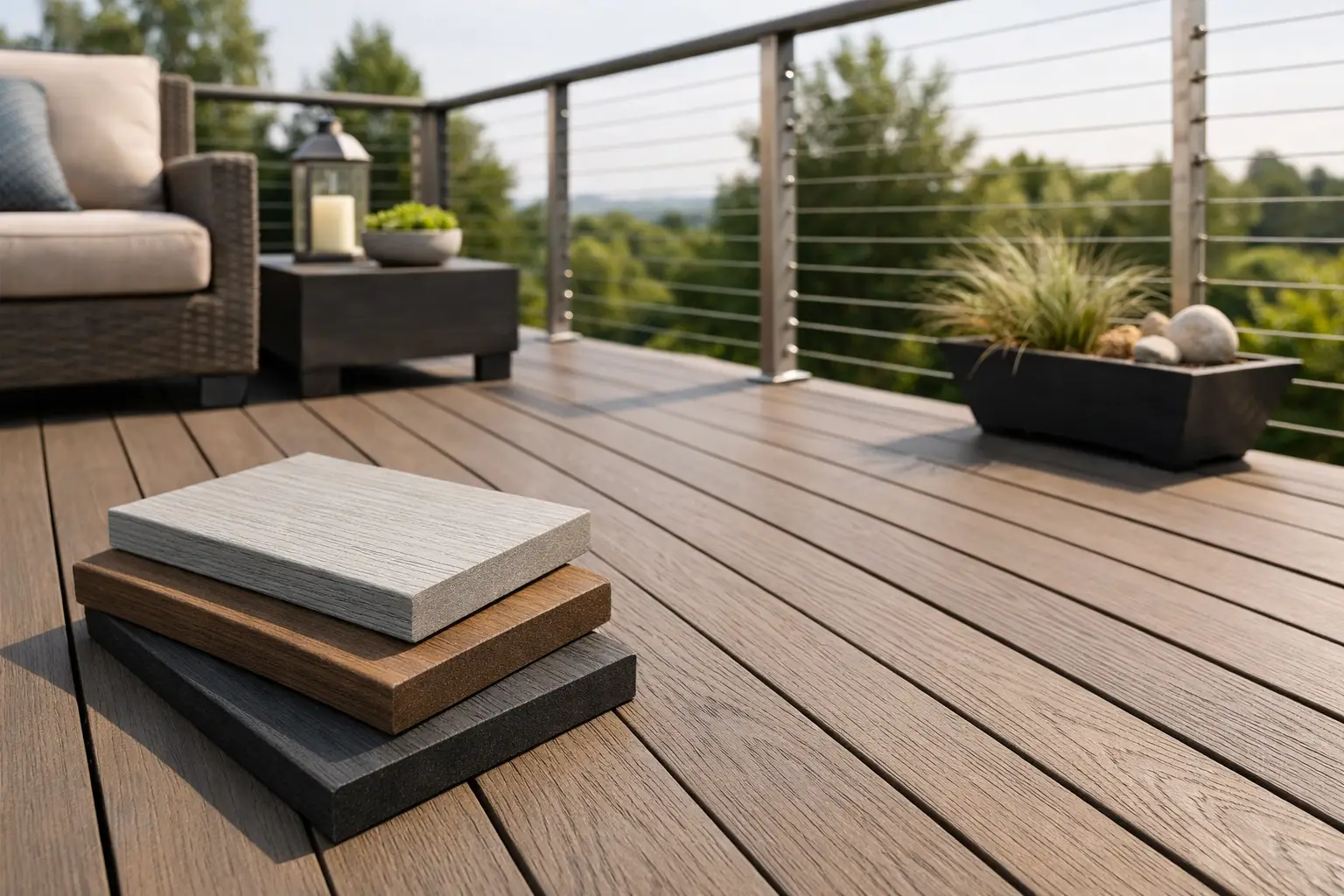
Capped composite decking is the material many homeowners choose when they want the warmth and visual appeal of wood without wood’s demanding upkeep. These boards are made from a composite core and protected by a durable outer cap designed to resist moisture, staining, fading, and everyday wear.
Trex composite decking is especially well suited to homeowners who want a polished outdoor-living space that stays attractive season after season. It is available in a broad range of colors and grain patterns, so a deck can complement anything from a traditional brick home in New Castle County to a newer coastal-inspired property in Sussex County.
The practical advantages are clear. Composite boards do not need to be stained or sealed. They resist splinters, which matters for families with children, pets, or bare feet around a pool. They also provide a consistent finished appearance that is difficult to maintain with aging wood.
There are trade-offs. Composite decking generally costs more upfront than pressure-treated lumber, and darker colors can become warm in direct summer sun. Some homeowners may also prefer the exact character and variation of real wood. Still, when lower upkeep, longevity, and a clean finished look are priorities, composite is often the strongest overall value.
Deck Masters, LLC builds with Trex products because material quality and installation standards need to work together. As a TrexPRO Platinum Installer, the team follows manufacturer specifications while designing decks around how each homeowner plans to use the space.
Capped Composite vs. Uncapped Composite
Not all composite boards offer the same level of protection. Older or uncapped composite products can be more vulnerable to staining, fading, moisture absorption, and surface wear. Modern capped composite boards add a protective shell around the core, making them a better fit for homeowners seeking a truly low-maintenance finish.
This is one reason it pays to compare specific product lines rather than choosing a board based on a sample alone. Look at the warranty, traction, color options, board profile, and recommended cleaning practices. A full-size showroom display can also help you see how color, texture, and railings work together in natural light.
PVC Decking: Strong Moisture Resistance, Different Feel
PVC decking is another excellent low-maintenance option. Unlike composite, PVC boards contain no wood content. That makes them highly resistant to moisture and a practical consideration for pool decks, waterfront properties, shaded yards, or locations where drainage is a major concern.
PVC boards are lightweight, resist rot and insects, and typically need only routine cleaning. Some products also stay somewhat cooler underfoot than darker composite boards, although color, sun exposure, and product design all play a role.
The trade-off is appearance and cost. High-quality PVC decking can be expensive, and some homeowners find that composite provides a more natural wood-like texture. PVC can also have more expansion and contraction than composite, which makes proper installation details particularly important. The board spacing and fastening method should be planned for the conditions at your home, not guessed at on installation day.
Pressure-Treated Wood: Lower First Cost, Higher Ongoing Work
Pressure-treated lumber remains common because it is familiar and has a lower initial material cost. For homeowners with a limited immediate budget, it can be a workable solution, especially for a simple platform deck.
However, it does not belong at the top of the list for low-maintenance living. Wood needs periodic sealing or staining to help manage moisture exposure and sun damage. Over time, boards can check, crack, warp, splinter, or fade. Fasteners may loosen, and areas near stairs, railings, and board ends deserve regular attention.
That maintenance is not necessarily a problem for a homeowner who enjoys caring for natural wood and accepts its changing appearance. But if your goal is to spend more weekends entertaining, grilling, or relaxing outdoors, the yearly labor and future replacement costs should be part of the decision from the beginning.
Hardwood and Cedar: Beautiful, but Not Hands-Off
Cedar and premium hardwoods offer natural beauty that manufactured decking cannot perfectly duplicate. Cedar is lighter and naturally resistant to some insect activity, while tropical hardwoods can be exceptionally dense and durable.
Both require care. Sun exposure can turn the boards gray, and preserving their original color typically requires cleaning and refinishing. Hardwood decks may also need specialized fastening, cutting tools, and maintenance products. These materials can be a good fit for homeowners committed to the look and upkeep of real wood, but they are not the easiest route to a low-care outdoor space.
Do Not Overlook Railings, Stairs, and the Deck Frame
A low-maintenance deck surface paired with high-maintenance components can still create unnecessary work. Railings, stairs, privacy panels, skirting, and underdeck areas should be selected with the same long-term thinking as the deck boards.
Composite or aluminum rail systems eliminate much of the painting and rot concern associated with traditional wood railings. Cocktail rail caps can add a useful surface for drinks and planters while giving the railing a more finished look. Integrated lighting improves safety on stairs and extends the hours you can enjoy the deck without adding loose cords or temporary fixtures.
The framing matters just as much. A deck needs proper footings, connections, hardware, and drainage to remain safe and stable. In wet or shaded areas, attention to airflow and water management helps protect the structure below. If you are adding underdecking to create dry storage or a covered patio area, it should be coordinated with the deck design before construction begins.
How to Choose the Right Material for Your Home
Start with how you want to live on the deck. A quiet second-story retreat has different priorities than a large entertaining area with a grill, dining table, and frequent guests. A pool deck needs dependable traction and moisture performance. A shaded backyard may call for extra attention to drainage and easy cleaning.
Then consider the total ownership cost, not just the first estimate. A less expensive wood deck may cost more in time and maintenance products over the years. A composite deck costs more initially, but its reduced maintenance, durable finish, and long-term warranty protection can make it the more comfortable investment for many homeowners.
Finally, choose an installer with the experience to explain the details behind the finished appearance. Ask how the boards will be fastened, how the deck will connect to the home, what warranty applies, who supervises the work, and how final quality will be checked. Clear answers are a sign that the contractor is planning for decades of use, not simply the day the crew leaves.
Your outdoor space should feel like an extension of your home, built for cookouts, quiet mornings, family gatherings, and years of dependable use. Bring your ideas, measurements, and inspiration to a consultation or showroom visit, and make the material decision with the full project in view.