

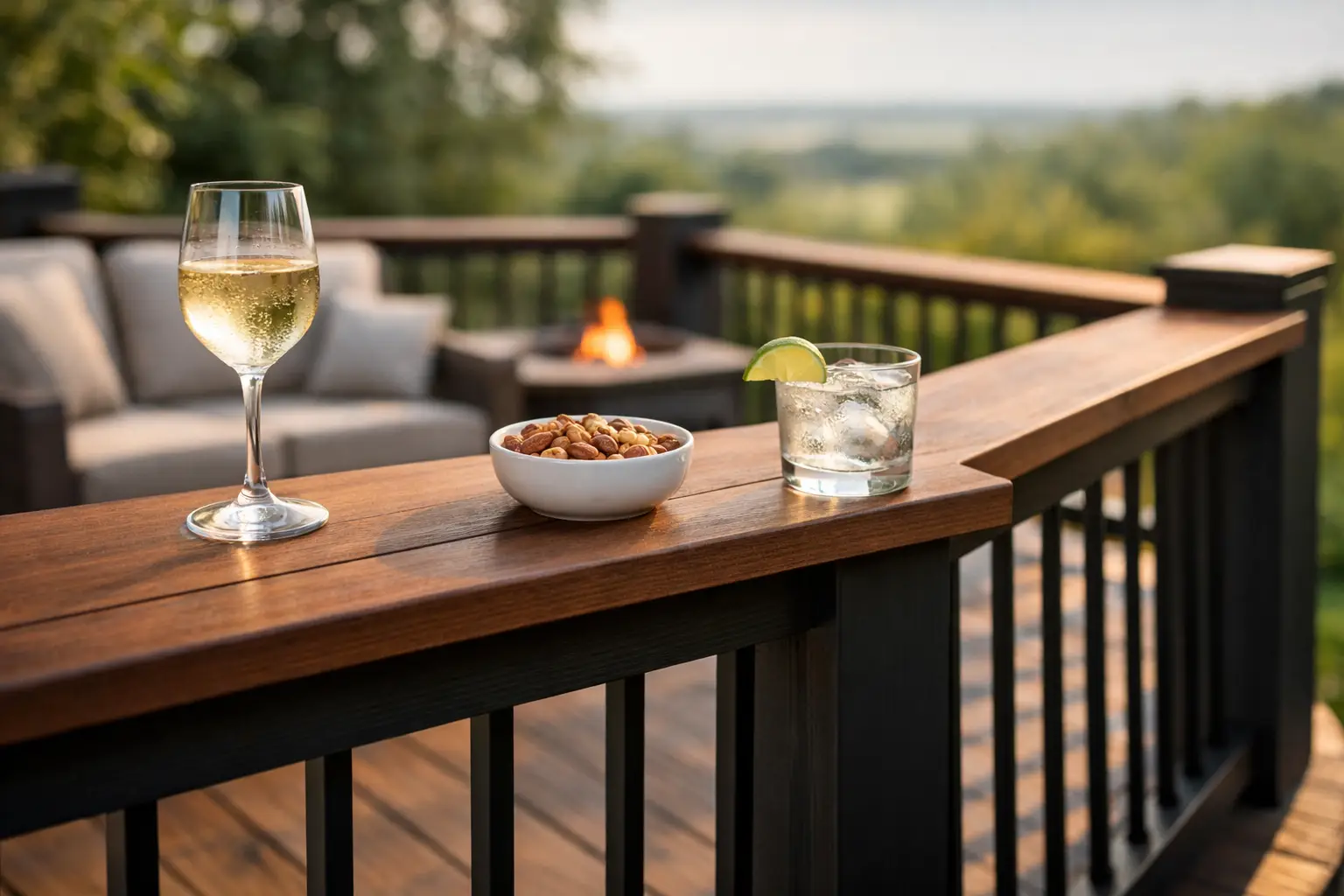
A serving tray that has nowhere to land can make an otherwise beautiful deck feel unfinished. A deck railing with cocktail rail solves that small but familiar problem by turning the top of the railing into a practical ledge for drinks, plates, planters, and the everyday items that come outside with your family.
For Delaware homeowners, the appeal is about more than a place to set a glass. A well-designed cocktail rail makes the deck feel more intentional, creates a polished perimeter, and gives an outdoor living space a detail guests notice right away. When it is properly planned and installed, it can add function without giving up the clean look or low-maintenance performance homeowners expect from a premium composite deck.
What Is a Deck Railing With Cocktail Rail?
A cocktail rail is a flat cap installed across the top of a deck railing. Rather than ending with a narrow, rounded rail profile, the railing receives a wider board or coordinated cap that creates a stable horizontal surface. It is often finished in a color that matches the deck boards or provides a deliberate contrast against the rail system.
The result is part railing, part serving ledge. On a typical backyard deck, it can hold a row of beverages during a cookout, small planters, outdoor candles, or a phone while you keep an eye on the grill. Around a pool deck or covered porch, it can make the entire perimeter feel more useful without crowding the main floor area with another table.
This feature works especially well with composite decking because it can visually tie the walking surface, stairs, picture-frame borders, and railing together. The best design is not always an exact color match, however. A dark rail cap paired with lighter deck boards can give the railing definition and help frame the view of the yard.
Why Homeowners Choose a Cocktail Rail
The practical benefit is immediate. Outdoor entertaining tends to spread across every available surface, and a wide rail cap provides a convenient spot for the things people reach for most. It is particularly helpful on compact decks, where a large dining table, lounge seating, and a separate serving station may not all fit comfortably.
A cocktail rail also brings visual weight to the perimeter. Standard railing can sometimes disappear against a busy backyard, while a finished cap gives the deck a more substantial, furniture-like appearance. This matters on elevated decks, where the railing is one of the most visible parts of the project from both the yard and inside the home.
There is also a long-term design advantage. Homeowners frequently begin with a simple deck and add features over time, such as lighting, a pergola, privacy panels, or an underdeck ceiling. A well-selected cocktail rail gives those future upgrades a cohesive edge to work from. It makes the deck look designed from the beginning rather than assembled one feature at a time.
Where a Cocktail Rail Makes the Most Sense
Not every railing needs a cocktail rail on every side. The most successful projects use it where it improves the way the space is used.
On a deck outside a kitchen or dining room, a cocktail rail is often valuable along the side nearest the grill or seating area. It becomes a natural landing spot when food and drinks are moving in and out of the house. On a second-story deck, it can be an excellent choice along the outer perimeter where homeowners enjoy sunset views but still want a finished, usable edge.
For a pool deck, the rail cap can help define zones between water, seating, and circulation areas. On a screened porch, it can create a clean sill-like detail that complements the structure without filling the room with extra furniture.
It may be less useful on a very narrow deck where railing width already affects circulation, or where a clear glass railing is selected specifically to preserve an open view. In those cases, a slimmer top rail may better support the overall design. The right answer depends on how the deck will be furnished, where people gather, and what view the homeowner wants to protect.
Materials and Color Choices Matter
A cocktail rail is exposed to the same sun, rain, pollen, and seasonal temperature changes as the rest of the deck. That is why material compatibility matters. A cap board and railing system should be selected and installed according to manufacturer specifications, with the correct fasteners, spacing, support, and expansion allowances.
Composite cap boards are a popular choice because they coordinate naturally with composite decking and reduce the maintenance associated with painting or staining wood. They also offer a finished appearance that holds up well through Delaware’s humid summers, winter moisture, and frequent temperature shifts.
Color selection deserves more thought than many homeowners expect. Matching the cocktail rail to the deck can create a unified, tailored look. Choosing a contrasting shade can highlight the railing and make the deck feel more architectural. A warm brown cap can soften black balusters, while a charcoal or black cap can add crisp definition to lighter gray decking.
Keep heat in mind as well. Darker surfaces can become noticeably warmer in direct sun, especially on an uncovered south- or west-facing deck. If your family spends long summer afternoons leaning against the railing or using it as a buffet ledge, the color choice should balance appearance with comfort.
Rail Style Changes the Final Look
The cocktail rail should complement the railing infill below it. Black aluminum balusters create a classic, open look and work well with many deck colors. Cable railing can provide a more contemporary feel, although the project must be carefully designed to meet code requirements and maintain proper tension. Composite railing offers a more traditional, substantial profile, while glass panels preserve a view but may call for a different cap detail.
A showroom visit can be useful here. Seeing full-size railing displays in person makes it easier to judge height, color contrast, texture, and how a rail cap feels under your hand. Small samples are helpful, but a full section of railing gives a more realistic sense of scale.
Safety and Code Requirements Still Come First
A cocktail rail should never be treated as an afterthought added to a railing that was not designed to receive it. The railing itself must be securely attached, properly blocked, and built to meet applicable residential code requirements. The cap is a finishing feature, not a substitute for structural support.
Height is a key consideration. Many deck guardrails must meet a minimum height requirement, commonly 36 inches for residential applications, though conditions and local requirements can vary. Adding a cap changes the finished profile, so measurements need to be confirmed as part of the original design. Stair railings also have separate requirements, including graspable handrails where needed. A wide, flat cocktail rail is not the same thing as a code-compliant handrail.
Spacing between balusters, load resistance at posts, attachment methods, and the transition at stairs all deserve professional attention. These details affect safety, inspection, and the service life of the entire railing system. A polished-looking cap cannot compensate for loose posts or poorly planned connections.
Planning for Lighting, Privacy, and Future Features
A cocktail rail can be a smart foundation for additional deck features. Low-voltage post-cap lights, stair lighting, and accent lighting can make the rail line safer and more inviting after dark. The cap also gives the perimeter a finished edge that works well beside privacy panels, pergola posts, and built-in seating.
Planning these elements together is usually more efficient than trying to retrofit them after the deck is complete. For example, wiring pathways should be considered before rail sections are installed, and privacy panels need posts engineered for their added wind load. If the deck may eventually receive a covered roof, screened enclosure, or outdoor kitchen, those plans can influence the railing layout from day one.
This is where experienced design input pays off. Deck Masters, LLC helps homeowners evaluate not only what looks good on a drawing, but also how each feature will be constructed, used, and maintained for years to come.
Questions to Ask Before You Add One
Before selecting a deck railing with cocktail rail, consider how often you entertain, whether the deck is exposed to full sun, and which side of the railing will get the most use. Think about furniture placement, grill traffic, stairs, and whether children or pets will regularly use the space.
Ask your contractor how the cap will be attached, what material is recommended for the selected railing system, and whether the final railing height will meet local requirements. It is also wise to ask how the rail cap will terminate at posts and stairs. Clean transitions are a small detail that separates a finished custom deck from a project that looks improvised.
A cocktail rail is a modest feature with an outsized effect on daily enjoyment. When it is designed around the way your family actually uses the deck, it becomes more than a place to rest a drink. It becomes one of those dependable details that makes stepping outside feel like the best part of being home.