

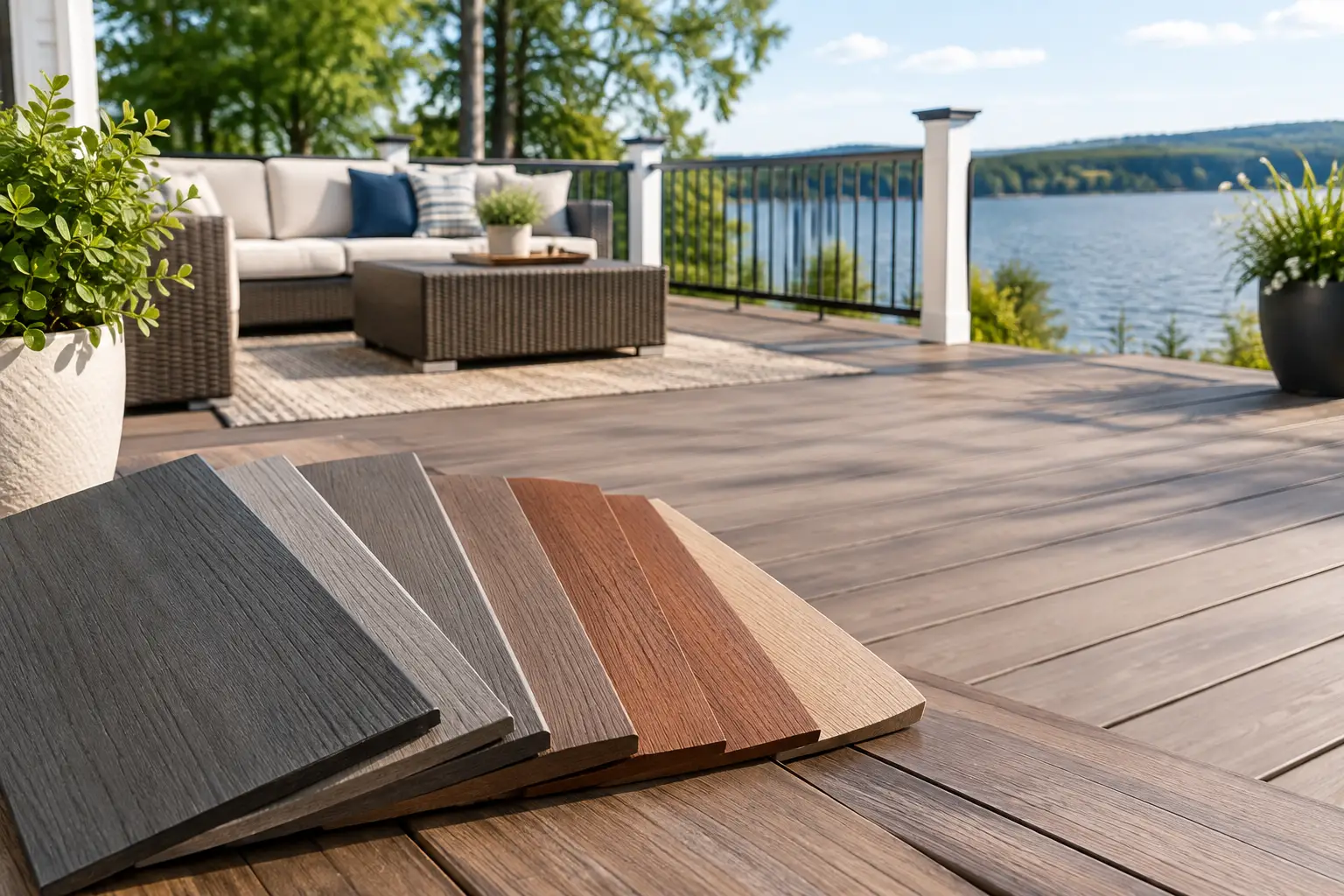
A deck color can make a new outdoor space feel built for your home or like an afterthought. This Trex color guide helps Delaware and southeastern Pennsylvania homeowners narrow the choices with the details that matter most: your home’s exterior, sunlight, railing style, and how you plan to use the space.
Trex composite decking offers the low-maintenance performance many homeowners want, but color still deserves careful consideration. The right board shade supports your home’s architecture, makes the deck feel appropriately sized, and gives furniture, lighting, and landscaping a polished backdrop. The best choice is rarely about picking the most popular sample. It is about choosing a color that works on your property for years.
Start With Your Home, Not the Deck Board
Trex colors look different when they are installed across a full deck than they do on a small sample. Before focusing on a favorite shade, look at the permanent colors already on your property: siding, brick, stone, roof shingles, window trim, and exterior doors. Your deck does not need to match them exactly. It should complement them without competing for attention.
Homes with warm brick, tan siding, cream trim, or brown roofing often pair naturally with warm brown, reddish-brown, and weathered wood tones. A warm deck can make a backyard feel welcoming and established, especially when the home has traditional architecture.
Homes with gray siding, black windows, white trim, blue tones, or contemporary stonework often support cooler grays and deeper charcoal boards. These choices can create a clean, tailored look. A dark deck against a light home can be especially striking, although it brings practical considerations in direct sun.
If your exterior includes several colors already, a balanced medium tone is often the safer choice. It gives the deck visual presence without adding another strong color to the mix.
Trex Color Guide: Warm, Cool, and Neutral Choices
Trex decking collections offer different color families, grain patterns, and levels of variation. The specific selection should be viewed in person, because texture and multi-tonal streaking are difficult to judge from a screen. Still, thinking in color families is a productive place to start.
Warm Browns and Earth Tones
Warm tones work well when you want the deck to feel connected to natural landscaping, brick facades, or a traditional home. Brown and reddish-brown boards can bring warmth to large deck footprints and help a backyard feel more inviting through every season.
They also tend to be forgiving with everyday outdoor living. Fallen leaves, mulch, and natural debris may blend more easily into a variegated earth-tone board than on a very pale gray surface. That does not replace routine cleaning, but it can make a busy family deck look orderly between washes.
The trade-off is that a very warm board beside cool gray siding or black metal accents may look disconnected. In that setting, add warm elements elsewhere, such as wood-toned furniture or bronze lighting, only if they are intentional parts of the overall design.
Gray and Driftwood-Inspired Tones
Gray decking is a strong fit for coastal-inspired, transitional, and contemporary homes. Lighter weathered shades can make a smaller deck feel more open, while medium gray boards offer an adaptable foundation for nearly any furniture color.
Gray also pairs well with white, black, or charcoal railings. For homeowners who want a clean, modern outdoor room, this combination has lasting appeal. However, very light colors can show dirt, pollen, and food spills more readily, while some cool grays can feel stark beside heavily warm brick or yellow-toned siding.
A board with natural variation often softens the look. It gives the deck depth and helps it feel less flat than a single-tone surface.
Deep Browns and Charcoal Colors
Deep brown and charcoal decking creates contrast and can make a deck look substantial and refined. These colors work particularly well with white or light-gray siding, stone columns, black railing systems, and covered porch designs.
Consider heat before choosing the darkest board. Every deck surface warms in direct summer sun, but darker colors generally absorb more heat. On a sunny, uncovered pool deck or a south-facing entertaining area, that difference can affect bare feet, pets, and how comfortably your family uses the space at midday.
Dark decking can also show dust, pollen, and lighter debris more clearly. It is an attractive option, but it is best selected with realistic expectations about exposure and routine care.
Consider Sunlight at the Actual Deck Location
A color choice that looks perfect in a showroom can change dramatically outside. Morning sun, afternoon shade, nearby trees, and the direction of the house all affect what you see.
Bring samples outdoors and view them beside your siding at different times of day. Place them flat, as decking will be installed, rather than holding them vertically. A vertical sample catches light differently and can make the shade appear lighter or darker than it will underfoot.
For heavily shaded yards, avoid assuming you need the lightest possible deck. Shade can already make a pale gray look cool or washed out. A medium warm brown or balanced gray may provide better definition. In wide-open, sunny yards, lighter or medium colors can reduce the visual weight of a large deck and may be more comfortable underfoot than the darkest options.
Coordinate Railing, Borders, and Stairs
Decking is only one part of the finished view. Railings, picture-frame borders, fascia, stairs, skirting, and lighting should be considered at the same time. This is where a color plan becomes a complete outdoor-living design rather than simply a floor surface.
A single-color deck creates a calm, cohesive appearance and can be the right fit for a smaller yard or classic home. Adding a contrasting border gives the deck more definition, particularly around stair landings, perimeter edges, or a dedicated dining area. A darker border around a lighter field can make the layout feel intentional, while a lighter border can soften a dark deck.
Railing color has an outsized impact because it sits at eye level. White railing often feels traditional and bright. Black railing offers a more contemporary frame and can preserve views of the yard. Bronze and earth-tone railings are useful where homeowners want a warmer, more natural finish. If privacy panels, cocktail rail caps, or lighting are part of the plan, choose their finishes early so they support the decking rather than clash with it.
Match the Color to How You Live Outside
The most attractive Trex deck is one your household will use comfortably. A poolside deck, outdoor kitchen area, screened porch, and quiet morning-coffee platform do not all need the same priorities.
For high-traffic family spaces, medium multi-tonal boards are often a practical choice because they balance visual warmth with day-to-day forgiveness. For a formal entertaining deck, a defined border and coordinated railing may be worth the added design investment. For a pool area, surface temperature, glare, wet-foot traffic, and the color of surrounding pavers should all be part of the conversation.
Also consider furniture. A neutral deck gives you freedom to change cushions and accessories over time. A strongly warm or cool deck can be beautiful, but it asks the furniture palette to work harder. If you enjoy changing outdoor décor frequently, a balanced gray or brown may give you more flexibility.
See Full-Size Displays Before You Decide
Small samples are helpful, but they cannot show the scale, board variation, or finished details of a complete deck. A physical showroom lets you compare decking with railings, borders, stairs, and lighting in a way photos cannot duplicate. It also makes it easier to understand how two colors may look together in a finished design.
At Deck Masters, color selection is part of the larger planning process, not a decision made after the design is set. As a TrexPRO Platinum Installer, the team can help homeowners evaluate their choices against the home, the site conditions, and the features they want to include. That guidance matters because a premium deck should be built to manufacturer specifications and designed as one complete space.
Bring photos of your home’s exterior, roofline, backyard, and any patio or pool areas to your consultation. Seeing those details alongside full-size Trex displays is often the clearest way to move from a stack of samples to a color choice you will be glad to see every time you step outside.