

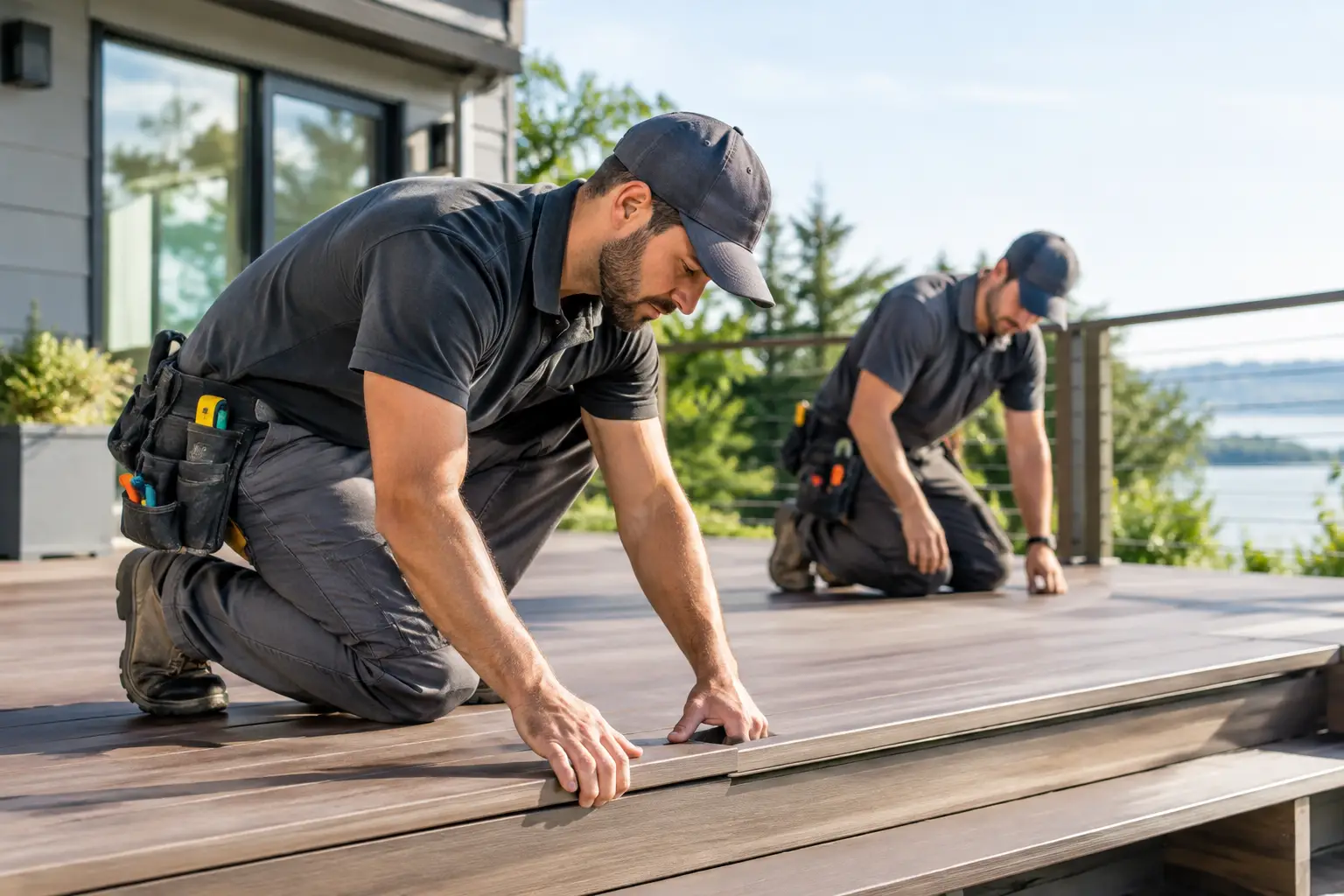
A new deck should feel like an upgrade from the first time you step outside, not a project you worry about after the contractor leaves. Choosing a TrexPRO Platinum installer gives homeowners a stronger starting point: a contractor with Trex-specific experience, access to current product knowledge, and a demonstrated commitment to building composite decks correctly.
Trex decking is built for low-maintenance outdoor living, but the material alone cannot make a deck safe, attractive, or long-lasting. The design, framing, fastening, drainage, stairs, railings, and finishing details all matter. For homeowners in Delaware and southern Chester County, that is where an experienced Trex specialist earns their place on the project.
What TrexPRO Platinum Status Means
TrexPRO is Trex’s contractor program for builders who work with its decking and outdoor-living products. Platinum status represents a high level within that program. It signals that a contractor has established experience installing Trex products and has met the program’s requirements for product knowledge, professional practices, and project volume.
For a homeowner, the credential is not a substitute for asking questions or reviewing completed work. It is, however, meaningful proof that Trex recognizes the contractor as a committed professional in composite deck construction. A Platinum contractor is not learning the material on your job site.
That distinction matters because Trex systems are engineered with specific installation requirements. Proper board spacing allows for seasonal movement and drainage. Approved fastening methods protect the finished surface. Correct framing layout supports the boards and helps prevent an uneven appearance over time. Railings, lighting, fascia, and stair components must also work together as one finished system.
A qualified installer understands those requirements before the first board is delivered. They can also help a homeowner compare product lines, colors, railing styles, and design options based on how the deck will actually be used.
A TrexPRO Platinum Installer Brings More Than Materials
Homeowners often begin by comparing deck board colors or calculating square footage. Those decisions are important, but a premium deck is a construction project before it is a finished outdoor room. The work below the decking has as much to do with the deck’s performance as the surface you see every day.
A professional TrexPRO Platinum installer begins with the property itself. Is the grade sloped toward the home? Will water drain away from the structure? Does the deck need to accommodate a patio door, a pool, a screened porch, or a multi-level layout? Are there existing footings, utilities, or structural conditions that need attention? These details affect the design, budget, and long-term durability.
The right contractor also understands that every family uses outdoor space differently. A small landing off the kitchen may need a simple, clean layout with safe stairs and a railing that preserves the view. A larger backyard may call for separate dining and lounge areas, privacy panels, built-in lighting, a pergola, or a covered space. The best design is not necessarily the largest one. It is the one that makes the yard more useful and fits the home naturally.
Trex products offer flexibility, but flexibility should be handled with discipline. Picture framing, curved borders, contrasting colors, cocktail rail caps, and custom stair layouts can make a deck look exceptional. They also require careful planning and precise execution. An installer with deep Trex experience can explain where upgraded details add real value and where a simpler approach may better serve your budget.
Installation Details That Protect Your Investment
Composite decking is valued because it avoids much of the staining, sanding, and sealing associated with traditional wood. Still, low maintenance does not mean no planning. A deck needs sound structure, proper airflow, drainage, and secure connections to perform well through Delaware’s humid summers, heavy rain, temperature shifts, and winter weather.
Framing, footings, and connections
The deck frame carries the load. It must be properly supported, securely connected, and built with appropriate joist spacing for the chosen Trex boards and layout. If a deck includes diagonal decking patterns, stairs, railings, or heavy features such as a pergola, the framing plan may need additional support.
Footings are equally important. They help protect the deck from movement and provide a stable foundation for years of use. Cutting corners below the deck can lead to problems that are costly and disruptive to correct later, even if the surface boards still look good.
Drainage and moisture management
Water management is one of the most overlooked parts of deck construction. A qualified contractor considers how water moves across the deck, around the house, and beneath the structure. Good spacing between boards is only part of the answer. Flashing, ledger attachment, framing protection, and site conditions deserve attention as well.
For homeowners who want dry, usable space beneath an elevated deck, underdecking can be planned as part of the original build. It is often easier to coordinate lighting, ceiling finishes, and drainage during construction than to retrofit them after the deck is complete.
Railings, stairs, and safety
Railings and stairs are not add-ons. They are essential safety features that influence the look and function of the entire project. The right railing can open up a view, complement the home’s architecture, and provide a comfortable place to set a drink with a cocktail rail cap. The right stair design creates a safe, natural transition to the yard or patio.
An experienced installer pays attention to details homeowners may not think to request, including consistent stair geometry, sturdy handrails, clean transitions, and secure attachment. These are the details you feel every time you use the deck.
Why Local Experience Matters in Delaware
A contractor may know composite decking well and still lack familiarity with local conditions, home styles, and permitting expectations. Local experience helps bridge that gap. A deck in Wilmington Manor, Newark, Middletown, Lewes, or southern Chester County may face different lot layouts, grades, architectural styles, and municipal requirements.
Working with a local specialist also gives homeowners a clearer way to evaluate workmanship. You can visit a showroom, see full-size product displays, ask to view completed projects, and speak with a team that understands the area. That is more useful than selecting a contractor based only on a low estimate or a few online photos.
Deck Masters, LLC combines more than 20 years of deck-building experience with TrexPRO Platinum status, owner-supervised work, and a physical showroom where homeowners can compare options in person. The goal is straightforward: build an outdoor space that looks right, functions well, and is constructed to manufacturer specifications.
Questions to Ask Before You Hire
TrexPRO Platinum status is a strong qualification, but a major home-improvement decision still deserves a careful conversation. Ask who will supervise the job, how the contractor handles permits and site conditions, and what is included in the written scope of work. Confirm the proposed decking, railing, lighting, stairs, skirting, and other features rather than assuming they are part of the price.
You should also ask about insurance, licensing, construction scheduling, cleanup, payment expectations, and final inspection. A dependable contractor welcomes these questions. Clear communication protects both the homeowner and the builder, especially when a project includes custom details or must coordinate with patios, pool areas, porches, or landscaping.
Warranty coverage is another worthwhile discussion. Trex products can carry substantial manufacturer protection, including a transferable 25-year manufacturer warranty on qualifying products. The contractor should explain what the product warranty covers, what workmanship coverage applies, and how to care for the finished deck without making maintenance feel like another weekend job.
Price should be considered in context. A lower bid may use a simpler design, omit structural work, reduce finishing details, or leave important items outside the contract. A higher-quality proposal should clearly show what you are receiving and why those construction choices matter. The best value is a deck that fits your needs, is built securely, and does not force expensive corrections later.
Your home is your castle, and the space beyond its back door deserves the same care as the rooms inside. Visit a showroom, bring your ideas and questions, and work with a contractor who can turn an underused yard into an outdoor space your family will enjoy for decades.