

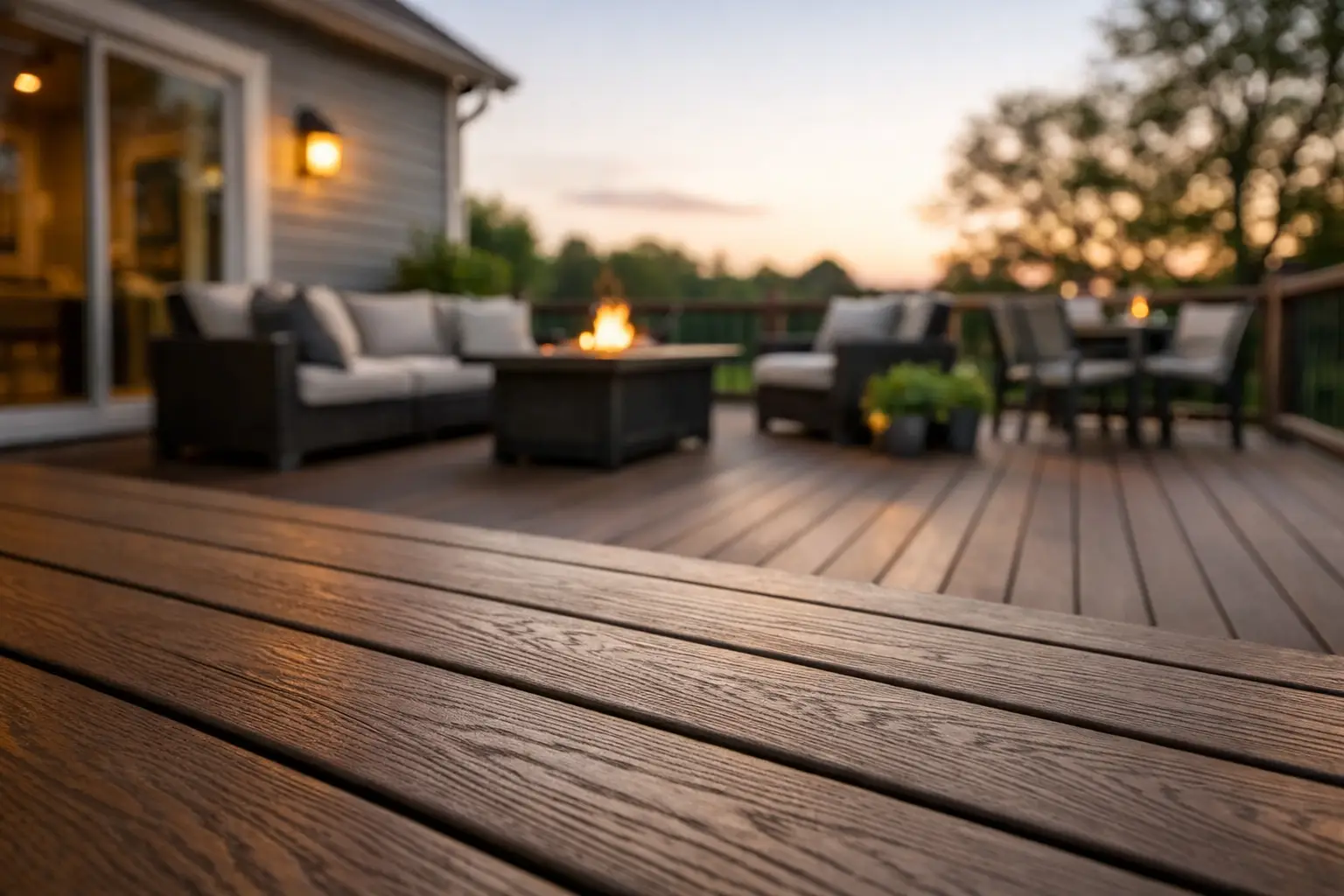
A deck should not feel like a project that starts over every few summers. Homeowners often ask, how long does Trex decking last, because they are weighing more than color and style. They want an outdoor space that can handle Delaware heat, heavy rain, winter freeze-thaw cycles, family gatherings, and everyday use without the sanding, staining, and splinter concerns associated with traditional wood.
Trex composite decking is built for long-term outdoor living. With the right product selection, professional installation, and reasonable care, a Trex deck can provide decades of enjoyment. The most precise answer, however, depends on the decking line, the condition of the supporting structure, and whether the deck was built to manufacturer specifications from the start.
How Long Does Trex Decking Last in Real Conditions?
Trex decking is designed to outlast the maintenance cycle of many wood decks. Trex boards resist the rot, insect damage, cracking, and splintering that can shorten the useful life of natural lumber. They do not require annual staining or sealing, which is a major reason homeowners choose composite decking for a permanent outdoor-living upgrade.
Many Trex products are supported by a 25-year limited residential warranty, with specific coverage varying by product line and warranty terms. That warranty is an important sign of the manufacturer’s confidence, but it should not be confused with a timer that runs out at year 25. A well-built Trex deck may continue to look and perform well beyond its warranty period.
The decking boards are only one part of the equation. A deck is a complete system that includes footings, framing, fasteners, flashing, railings, stairs, and drainage details. If the underlying structure is poorly built or has moisture damage, even premium composite boards cannot solve the problem. That is why experienced installation matters as much as the material itself.
What Helps a Trex Deck Last for Decades?
Trex composite decking has a major advantage over wood because it is engineered to manage the conditions that wear wood down. Capped composite boards have a protective outer shell that helps resist fading, staining, moisture intrusion, and surface damage from normal use. For a busy household, that means fewer weekends spent repairing boards and more time using the deck.
Still, no outdoor building material is maintenance-free or indestructible. The longest-lasting decks have proper ventilation beneath the boards, correct spacing for drainage and thermal movement, and framing that remains dry and structurally sound. Water needs a clear path away from the house and away from the deck framing. Debris should not be allowed to collect between boards or against the ledger area.
Delaware homeowners should also consider the local climate. Our region sees humid summers, wind-driven rain, leaves and pollen, winter moisture, and occasional snow and ice. A Trex deck is well suited to these conditions, but design details matter. A low deck close to the ground, for example, needs thoughtful airflow beneath it. A deck surrounding a pool may need additional attention to drainage, slip resistance, and the effects of chlorinated or saltwater splashing.
Installation Has a Direct Effect on Deck Life
A premium deck board deserves a secure foundation. Proper joist spacing supports the boards as intended and helps prevent excessive movement underfoot. Correct fasteners protect the appearance of the surface while allowing for normal expansion and contraction. Accurate flashing at the house protects one of the most critical areas of the entire structure.
A knowledgeable contractor will also inspect whether existing framing is suitable for composite decking. Trex boards can be an excellent option for resurfacing an older deck, but only when the current joists, beams, posts, footings, and ledger are safe and in good condition. Covering compromised framing with new composite boards creates a deck that may look better temporarily while leaving the real problem underneath.
At Deck Masters, LLC, owner-supervised construction and Trex-specific installation knowledge help protect the long-term value of each project. Details that are easy to overlook during construction can make a meaningful difference years later.
Trex Decking Warranty: What Homeowners Should Understand
Trex warranty protection is one reason composite decking is a confident choice for a major home investment. Many residential Trex decking products carry a 25-year limited warranty, and certain lines include stain and fade coverage. Warranty eligibility, transferability, exclusions, and claim procedures can differ by product and may change over time, so homeowners should review the current warranty for the exact boards being selected.
The key word is “limited.” A manufacturer warranty generally addresses defined material defects under stated conditions. It does not replace proper construction, routine cleaning, or care after severe events. For example, damage caused by improper installation, inadequate framing, unusual impacts, fire, or misuse may not be covered.
A professional contractor helps reduce those avoidable risks by following installation instructions for board spacing, fasteners, ventilation, stair construction, and railing components. Homeowners should also keep their paperwork, product information, and installation records. Those documents are useful if the home is sold or if a warranty question arises later.
How to Keep Trex Decking Looking Its Best
Trex decking does not demand the sanding, staining, or sealing associated with wood, but basic upkeep protects its appearance and keeps drainage paths clear. Most homeowners can handle routine care with a seasonal cleaning and a little attention after storms.
Sweep leaves, mulch, and dirt from the deck surface and the gaps between boards, especially in fall. Wash the deck periodically with soap and water or a cleaner approved for the specific Trex product. Address food spills, grease, and sunscreen residue sooner rather than later. Use a soft brush when needed, and follow current manufacturer guidance before using a pressure washer or any specialized cleaning product.
Avoid placing items that trap moisture directly against the deck for long periods. Outdoor rugs should be suitable for composite decking and allow the surface to dry. Planters should have drainage and should not leave standing water beneath them. When moving heavy furniture or grills, lift rather than drag whenever possible.
For snow, use a plastic shovel rather than a metal-edged tool that could mark the surface. Ice-melt products should be chosen carefully according to the decking manufacturer’s recommendations. These simple habits do not require much time, but they can preserve the finished look of the deck season after season.
When a Trex Deck May Need Attention Before the Boards Do
One of the advantages of composite decking is that the boards may stay in good shape even as other components age. That means homeowners should inspect the full deck, not just the surface. Look for loose railings, movement at stairs, corroded hardware, soft or damaged framing, pooling water, or separation where the deck meets the house.
Annual inspections are especially wise for decks built over sloped yards, around pools, or high above grade. A qualified deck contractor can evaluate structural connections, footings, flashing, rail systems, and the condition of any older wood framing. Catching a drainage or connection issue early is far less disruptive than waiting for it to become a major repair.
If your deck is more than a decade old and you are considering resurfacing, do not assume new boards are the only answer. Sometimes the framing can be upgraded and resurfaced successfully. In other cases, replacing the deck creates a safer, better-designed outdoor area with improved stairs, lighting, privacy features, and space for the way your family lives now.
Is Trex Worth It for Long-Term Outdoor Living?
For homeowners who want the look of a finished deck without making staining and board replacement an annual tradition, Trex is often worth the higher upfront investment. The value comes from durability, lower routine maintenance, consistent appearance, and the ability to create a polished outdoor room that remains enjoyable for years.
The best result is not simply choosing a premium board. It is choosing a design that fits the home, a product line that fits the household’s priorities, and a contractor who treats drainage, framing, fasteners, and final inspection as seriously as the color of the decking. A well-planned Trex deck gives your family a dependable place to gather now and a feature your home can be proud to carry into the future.