

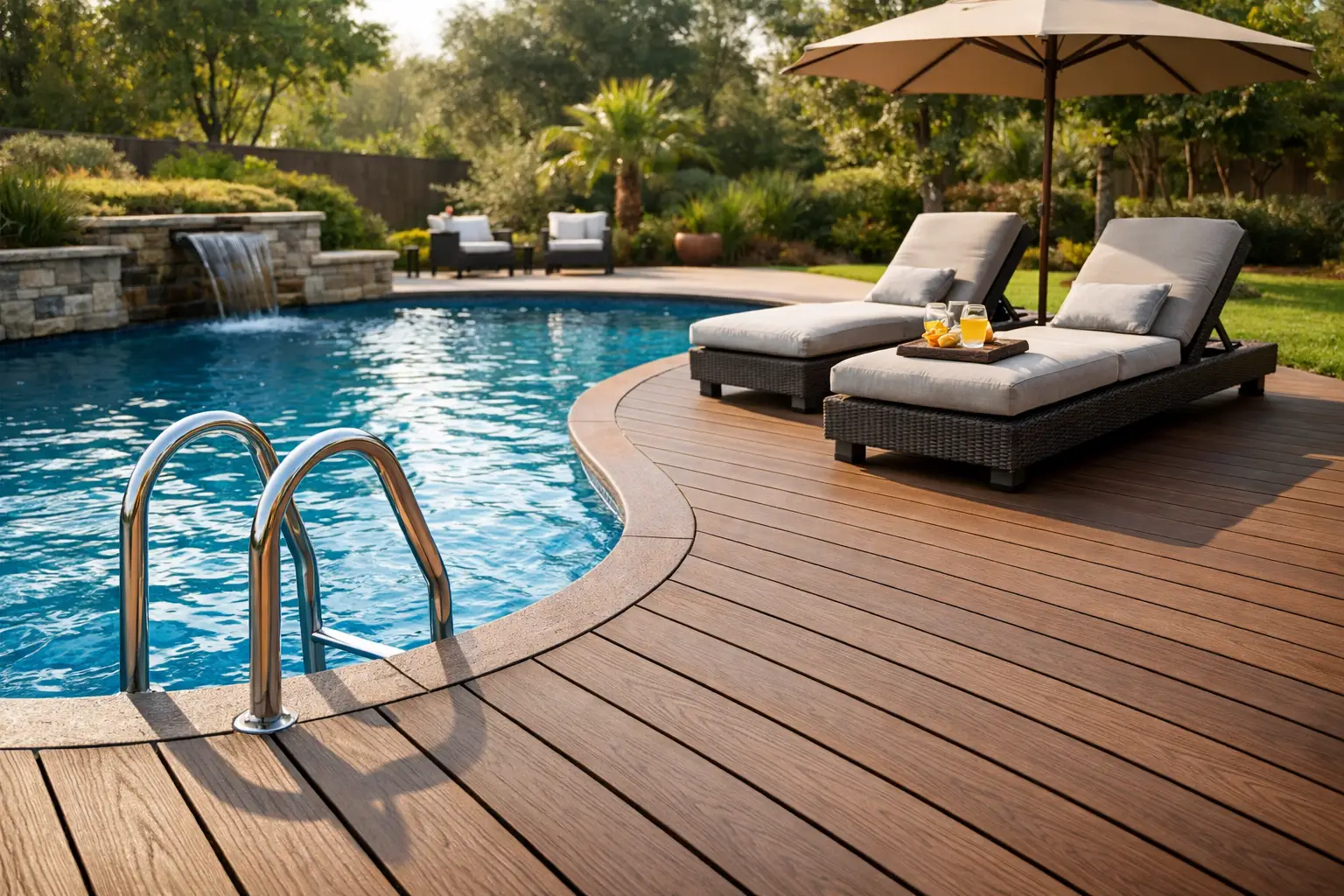
A pool should make the backyard easier to enjoy, not give you another surface to sand, stain, pressure wash, and worry about every summer. Composite decking around pool areas gives Delaware homeowners a clean, comfortable transition from the house to the water, with the finished look of a custom outdoor living space and far less upkeep than traditional wood.
That does not mean every composite board, deck layout, or installation method is right for a pool. The details matter. Heat, drainage, board spacing, stair design, rail placement, and the structure below the deck all affect how the space performs over time. A well-built pool deck should feel like a natural extension of your home while standing up to wet feet, splashing, sun exposure, and active family use.
Why Composite Decking Works Around a Pool
Wood pool decks can be beautiful, but they ask a lot of homeowners. Repeated exposure to water, sunscreen, pool chemicals, and changing weather can leave wood boards faded, splintered, warped, or in need of regular refinishing. Bare feet notice every rough board and raised fastener.
Quality composite decking eliminates many of those routine concerns. Trex composite decking is engineered for outdoor exposure and does not require staining or sealing. It resists rot, insect damage, and the cracking or splintering often associated with aging wood. For a pool setting, that means more time using the space and less time preparing it for the next gathering.
The appearance is another advantage. Composite boards are available in a range of colors and grain patterns, allowing the deck to coordinate with a pool coping, paver patio, home siding, or existing outdoor furniture. A lighter board color can create an open, coastal look around a pool, while medium and deeper tones may better complement brick, stone, or a shaded backyard.
Still, composite is not a magic material. Every outdoor surface can become slippery when water, leaves, algae, or lotion residue build up. Routine cleaning remains part of responsible pool ownership. The goal is a low-maintenance deck, not a no-maintenance one.
Planning Composite Decking Around Pool Areas
The best pool decks are designed around how the family actually uses the yard. A narrow path may be enough for a small pool with a separate patio. A larger in-ground pool often benefits from dedicated zones for lounging, grilling, dining, and moving safely between the house and the water.
Before choosing colors or railing styles, think through the traffic pattern. Where will swimmers enter from the house? Where will towels, pool toys, and outdoor furniture go? Is there enough room for chaise lounges without blocking the walking path? A deck that looks generous in a plan can feel crowded once furniture, guests, and pool equipment are in place.
Give Wet Areas Room to Breathe
A poolside deck needs usable clearance. People should be able to walk around furniture and pass one another without stepping too close to the water’s edge. Stairs require special attention, especially where children, guests, or older family members will use them with wet feet.
Wide stair treads, consistent riser heights, solid handrails where needed, and well-placed lighting can make a significant difference after sunset. Built-in benches can add seating without scattering chairs across the deck, while privacy panels may help define the pool area from neighboring properties.
If the pool is elevated, partially above ground, or sits on a sloped lot, the deck can do more than surround it. It can improve access, hide exposed pool walls, create a level entertaining area, and make an awkward grade feel intentional. These projects require careful structural planning, not just attractive surface boards.
Plan Drainage Before Construction Begins
Water should never be treated as an afterthought around a pool deck. Surface water needs a clear path away from the home, deck framing, and areas where it could collect. Proper board spacing helps water move through the deck surface, while the framing and ground conditions below must support drainage and airflow.
In some yards, a composite deck works best as part of a larger hardscape plan that includes pavers or a concrete patio. In others, it may be built over an existing concrete area if the site conditions and structural approach allow it. The right solution depends on the pool type, elevation changes, drainage conditions, and the condition of the existing surfaces.
A contractor should inspect these conditions before making promises about design or price. Covering a problem does not solve it. Sound preparation protects the deck investment and helps prevent callbacks later.
Choosing the Right Color and Finish
Color selection around a pool is partly visual and partly practical. Darker decking can look rich and dramatic, especially beside light-colored pool coping or a bright house exterior. But darker surfaces generally absorb more heat in direct sunlight. On an open, sunny deck, that can matter when people are barefoot.
Lighter colors may feel cooler underfoot and can make a compact yard appear larger. They may also show leaf debris, dirt, or sunscreen marks differently than darker boards. There is no universal best choice. The right color depends on sun exposure, surrounding materials, maintenance preferences, and the look you want to create.
A showroom visit is valuable for this decision. Full-size displays let homeowners see color variation, board texture, railing profiles, and accent options in person rather than relying on a small screen image. Bring photos of your pool, patio, siding, and outdoor furniture if you have them. A material that looks excellent by itself should also work with the rest of the property.
The Construction Below the Boards Matters Most
Premium composite decking deserves a properly built frame. Homeowners understandably focus on the visible surface, but the framing, connections, footings, fasteners, and flashing determine whether the deck stays secure and level for years to come.
Pool environments place added demands on construction. Framing must be built to applicable code requirements and manufacturer specifications, with thoughtful attention to ventilation, water exposure, and attachment details. Fasteners should be installed correctly so boards remain secure without leaving an uncomfortable field of raised screw heads. Where the deck meets the house, proper flashing and water management are essential.
This is why installation experience should carry as much weight as the material itself. A lower initial quote can become expensive if it leaves out structural work, drainage corrections, permit needs, safe access, or finished details such as skirting and lighting. Ask what is included, who will supervise the project, and how the contractor handles final inspection.
Deck Masters brings more than 20 years of deck-building experience to these decisions, with owner-supervised construction and TrexPRO Platinum installation expertise. For homeowners, that means the plan can be evaluated as a complete outdoor project rather than a stack of boards around a pool.
Add Features That Improve Everyday Use
The strongest pool-deck designs include practical features that earn their place. Low-voltage deck lighting improves visibility on steps and along walking paths. A cocktail rail cap gives guests a place to set a drink without adding more tables. Privacy panels can block an unwanted view, while lattice or finished skirting can clean up the appearance beneath an elevated deck.
Covered sections, pergolas, and screened structures can also make the pool area more comfortable during Delaware’s hot afternoons or unpredictable summer weather. The trade-off is that these additions affect budget, shade patterns, and the visual openness of the yard. They should be planned early, not treated as an afterthought once construction is underway.
For many families, the best investment is not the largest deck possible. It is a well-proportioned space that provides safe circulation, durable materials, comfortable gathering areas, and a design that fits the home. Start with how you want to spend a Saturday by the pool, then build the deck that makes that day feel easy year after year.