

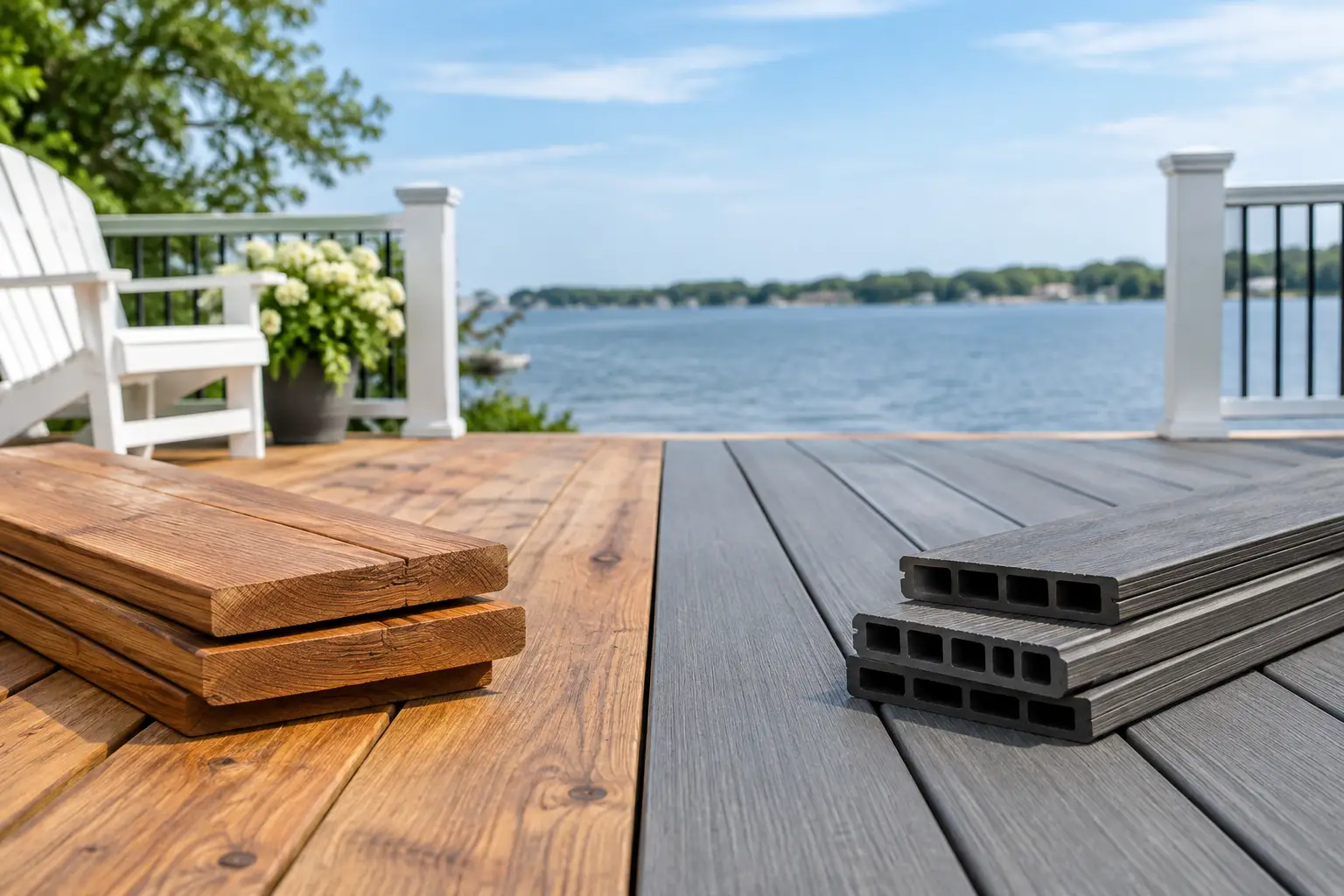
A deck should make it easier to use your backyard, not give you another weekend chore. That is the practical question behind wood versus composite decking for Delaware homeowners: Do you want the classic look and lower upfront price of wood, or a long-lasting outdoor surface built to handle weather, foot traffic, and everyday life with far less upkeep?
There is no single right answer for every home. A small platform deck with a modest budget has different needs than a multi-level entertaining space, a pool deck, or a covered porch designed for decades of family use. The best choice comes down to how you plan to use the space, how much maintenance you are willing to take on, and what you expect from your investment over time.
Wood Versus Composite Decking: The Core Difference
Wood decking is a natural product. Pressure-treated lumber is the most common budget-friendly option, while cedar, redwood, and hardwoods may offer a more refined appearance at a higher price. Wood has warmth, visible grain, and a traditional character that many homeowners appreciate. It can also be stained in a broad range of colors.
Composite decking is manufactured from a blend of recycled wood fibers and plastic, often protected by a durable outer cap. Premium composite boards are engineered to resist the problems that make wood decks demanding over time: moisture absorption, rot, splintering, insect damage, and frequent refinishing. Trex composite decking, for example, is designed for a polished wood-like appearance without requiring annual staining or sealing.
The distinction matters most after installation. Wood begins aging the moment it is exposed to sun, rain, humidity, leaves, pollen, and changing temperatures. Composite decking is not maintenance-free, but its care is much simpler and more predictable.
Upfront Price Is Only Part of the Cost
Wood generally costs less at the start, especially when pressure-treated lumber is used. For homeowners focused strictly on getting a deck built for the lowest initial investment, wood can be appealing. It remains a sensible material for certain projects, particularly when the deck is smaller or intended as a short-term improvement.
But a deck is not a one-time expense. Wood typically needs regular cleaning, staining, or sealing to preserve its appearance and protect it from moisture. Over the years, boards can crack, cup, warp, loosen, or require replacement. Railings, stairs, and areas near the ground often show wear first because they see more moisture and traffic.
Composite decking usually has a higher initial material cost. Its long-term value comes from reducing the recurring work and expense associated with maintaining a wood surface. Homeowners who plan to stay in their home for many years often find that the reduced upkeep, stronger appearance retention, and warranty coverage make composite the more comfortable investment.
The right comparison is not simply the price of boards on installation day. It is the cost of owning the deck over the years you expect to enjoy it.
Maintenance: Where the Difference Becomes Real
A wood deck needs attention to remain safe and attractive. At minimum, it should be inspected each season for loose fasteners, raised grain, soft spots, popped nails, and areas where water is collecting. Depending on exposure and the product used, cleaning and applying a protective finish may be needed every one to three years.
That work is manageable for some homeowners. If you enjoy hands-on home maintenance and like changing your deck color with stain, wood offers flexibility. The trade-off is that delaying maintenance can allow small issues to become costly repairs.
Composite decking does not require staining, sanding, or sealing. Routine care usually means clearing debris from between boards and washing the surface with soap and water as needed. That is especially valuable in Delaware, where seasonal pollen, wet leaves, summer humidity, and winter moisture can all take a toll on exterior wood.
For busy families, homeowners who travel, or anyone who would rather spend Saturday using the deck than refinishing it, composite has a clear advantage.
Appearance, Color, and Design Flexibility
Natural wood has a look that cannot be copied exactly. Each board carries its own grain and variation, and a well-maintained cedar or hardwood deck can be beautiful. The challenge is keeping that appearance consistent. Sun exposure can fade stain, and boards in shaded areas may weather differently from boards in full sun.
Today’s composite decking gives homeowners far more design choice than early-generation products. Capped composite boards are available in colors ranging from warm brown and weathered gray to deeper contemporary tones. Many feature variegated color and grain patterns that create a more natural, finished appearance.
Composite also supports a more coordinated outdoor-living design. Matching or complementary rail systems, cocktail rail caps, lighting, privacy panels, skirting, and stair details can make the deck feel like an intentional extension of the home rather than a simple platform outside the door. A well-designed layout matters as much as the decking material, particularly for homes with uneven yards, pools, patios, or screened structures.
Comfort, Safety, and Everyday Use
Both materials need thoughtful planning. A deck facing full afternoon sun can become hot underfoot, regardless of the surface selected. Darker colors generally absorb more heat than lighter colors, so material color should be considered alongside the deck’s orientation and available shade. Pergolas, covered sections, and strategically placed seating areas can improve comfort significantly.
Wood can develop splinters and rough areas as it ages, which is a concern for barefoot traffic, children, and pets. Composite boards are designed to remain smoother over time and are a popular option around pools and high-use entertaining areas. They also resist the moisture-related deterioration that can compromise a neglected wood deck.
Safety also depends on the structure beneath the surface. Even the finest decking boards cannot make up for undersized framing, poorly built stairs, weak railings, or improper fasteners. The deck should be constructed to applicable code requirements and manufacturer specifications, with close attention to footings, drainage, connections, and railing height.
Durability in Delaware Weather
Delaware decks experience a full range of conditions: humid summers, heavy rain, freeze-thaw cycles, falling leaves, and periods of snow and ice. Moisture is the constant concern. When wood repeatedly absorbs and releases moisture, it expands and contracts. Over time, that movement contributes to checking, warping, and fastener problems.
Pressure-treated lumber is treated to resist decay, but it is not immune to weathering. It still needs routine protection and inspection. Cedar and hardwoods offer their own benefits, yet they also require maintenance to retain their appearance and performance.
Capped composite decking is made for this kind of exposure. It will not rot, and it does not need to be sealed against water in the way wood does. Quality matters, however. Material selection, proper spacing, sound framing, and installation methods all affect how a deck performs year after year.
That is why choosing an experienced contractor matters as much as choosing a board. At Deck Masters, LLC, projects are designed around the home, the property, and the way the homeowner plans to live outdoors, then built with owner-supervised attention to the details that are easy to miss once construction is complete.
When Wood Still Makes Sense
Composite is not automatically the right fit for every project. Wood may be a good choice when initial cost is the primary concern, when a homeowner genuinely prefers the character of natural lumber, or when the deck is a smaller project that will not see heavy use. It can also work well for homeowners who are committed to a regular maintenance schedule.
The decision becomes less favorable for wood when the deck is large, elevated, near a pool, heavily shaded, or central to frequent entertaining. Those are the conditions where reduced maintenance and dependable appearance can justify the additional upfront cost of composite.
Warranty protection should also be part of the conversation. Premium composite products may include long manufacturer warranty coverage, sometimes transferable under the stated terms. Review those terms carefully and make sure the installation follows the manufacturer’s requirements, because proper installation is essential to preserving coverage.
Choose for the Life You Want to Live Outside
A deck is more than a material purchase. It is where family dinners run late, guests gather after a graduation party, and a quiet morning coffee gets a better view of the yard. If you want a lower-maintenance space that keeps its finished look through Delaware’s changing seasons, composite is often the stronger long-term choice. If natural wood and a lower starting price matter most, build with a realistic plan for its care.
Before selecting a color or requesting estimates, stand in your yard and picture how you want to use the space five, ten, and fifteen years from now. That answer will usually point you toward the decking material that feels right long after installation day.