

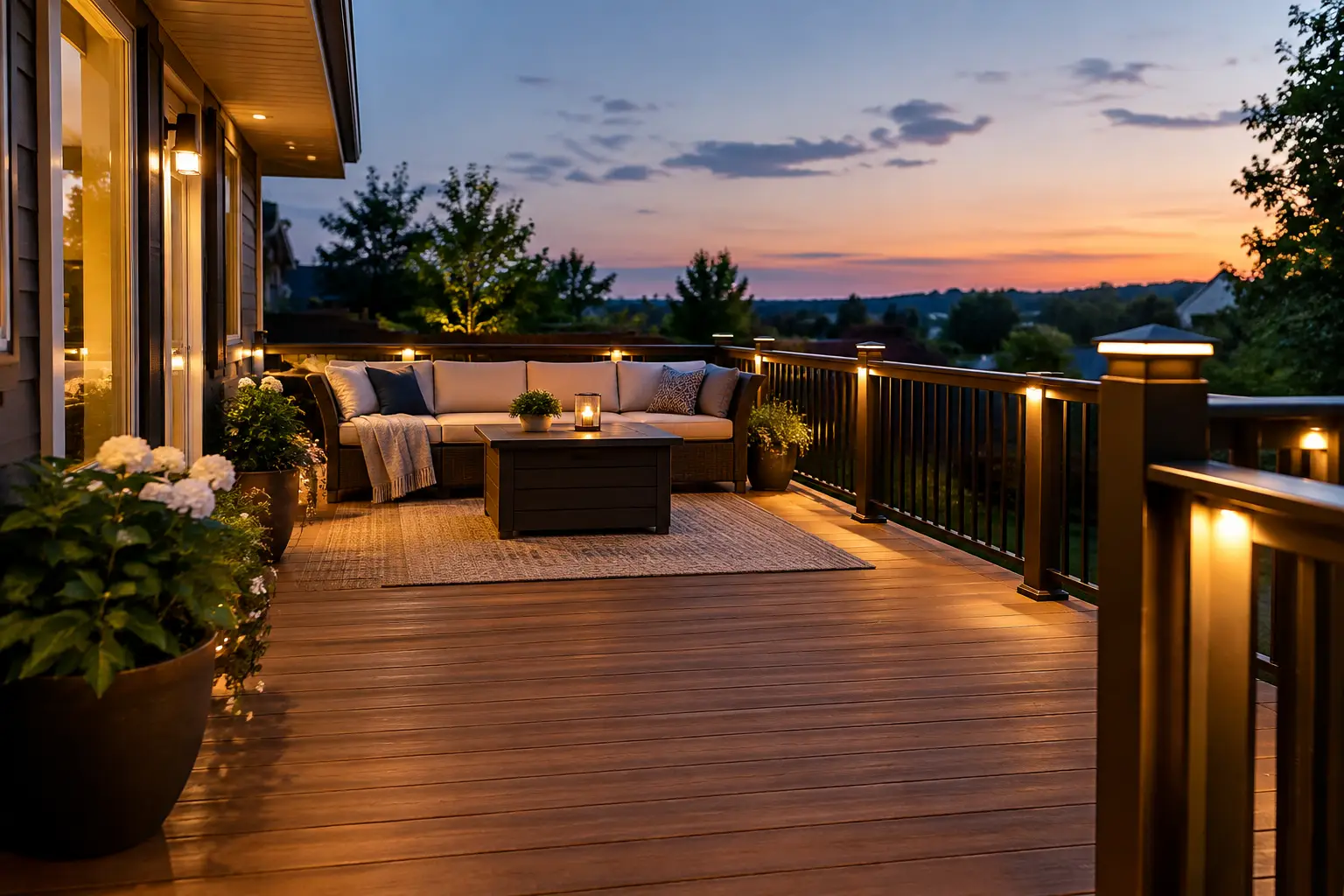
A deck can look exceptional in daylight and still disappear the moment the sun goes down. The best deck lighting changes that. It gives homeowners a safer path to the door, defines the edges of stairs and seating areas, and lets a well-built outdoor space remain useful for dinners, conversations, and quiet evenings long after sunset.
For Delaware homeowners, deck lighting is more than a finishing touch. It is a practical design decision that affects safety, atmosphere, maintenance, and how often the family actually uses the space. The right plan does not flood the yard with glare. It places light where people walk, gather, cook, and transition between the house and yard.
What Makes the Best Deck Lighting?
The best deck lighting is layered. Rather than relying on one bright fixture near the back door, a well-designed system combines low-level safety lighting with focused task lighting and softer ambient light. This approach makes the deck easier to navigate without taking away from the evening setting.
The right choices depend on the deck’s layout. A small elevated landing needs a different approach than a wide Trex deck with multiple stair runs, a grilling station, a pergola, and a lower patio. Lighting should follow the way the space will be used, not simply fill every available post and board with fixtures.
A successful plan also considers what the fixtures look like during the day. Premium rail lights, recessed stair lights, and neatly installed low-voltage wiring should complement the deck materials and railing system rather than look like an afterthought. On a high-quality composite deck, the details matter.
Start With Safety at Stairs and Changes in Elevation
Stairs should be the first priority. A single missed step can turn a relaxing evening into an avoidable accident, especially when guests are unfamiliar with the layout. Recessed riser lights and stair-side fixtures make each tread easier to see while keeping the light directed downward where it belongs.
For elevated decks, lighting near the top and bottom of each stairway is particularly valuable. If the stairs change direction at a landing, that landing should be clearly defined as well. The goal is visibility without creating harsh points of light that make it harder for the eye to adjust.
Post cap lights can provide helpful general illumination near stair openings and rail corners, but they should not be the only source of stair lighting. Their light spreads outward and downward, while dedicated stair fixtures more clearly define the walking surface.
Use Rail and Post Lights to Define the Deck Perimeter
Rail lighting gives the deck a finished, welcoming appearance from both inside and outside the home. It can outline the main entertaining area, make railing boundaries clear after dark, and add a warm glow visible from the yard or neighboring patio.
This is often where restraint pays off. Lighting every single post may be appropriate on a large deck with a long perimeter, but it can look overly busy on a compact platform. Strategic placement at stair entries, corners, transitions, and key seating areas generally produces a cleaner result.
Homeowners should also think about the view from indoors. A deck should feel inviting when seen through the kitchen or family-room windows at night. Warm-white lighting usually creates a more comfortable residential feel than cool blue-white light, which can make composite boards and outdoor furnishings appear stark.
Best Deck Lighting for Outdoor Living Zones
Once safety lighting is planned, the next step is supporting the activities that make the deck valuable. A dining table, outdoor kitchen, lounge area, hot tub, or pergola each needs light for a different reason.
A grill station benefits from brighter, targeted task lighting. The cook needs to see food clearly without depending on a phone flashlight or the spill of light from the house. Fixtures mounted thoughtfully on a nearby structure, pergola beam, or covered roofline can serve this purpose while keeping the main deck atmosphere relaxed.
Dining and conversation areas call for softer illumination. Low-profile rail lights, overhead fixtures in a covered porch, or subtle pergola lighting can create enough visibility for serving food and moving around without making the space feel like a brightly lit room. If a deck is used mostly for entertaining, this balance is often more valuable than maximum brightness.
For homeowners with a pool deck or patio below, the transition between levels deserves special attention. Light the route from the deck to the pool area, not just the destination. Clearly visible paths, gates, and stairs help guests move safely through the entire backyard.
Recessed Deck Lights: Attractive but Not Always Necessary
Small recessed lights installed in deck boards can create an elegant, custom appearance. They work especially well along a border, beside a seating zone, or at the edge of a larger deck where homeowners want a defined visual line.
However, recessed fixtures are not the automatic best choice for every project. They can be more involved to install, and their low mounting position means they are better for accent lighting than for illuminating a broad walking surface. They also need careful placement so chairs, tables, and foot traffic do not block or overpower the effect.
On a composite deck, the installation must be planned precisely. Proper drilling, wiring routes, and manufacturer-recommended methods protect the finished surface and preserve the clean appearance homeowners expect from premium materials.
Under-Rail Lighting Creates a Clean, Modern Effect
Under-rail lighting is a strong option for homeowners who want indirect illumination without visible fixtures on every post. Installed beneath the rail cap, it casts light downward across the deck surface and can make the railing appear to float at night.
This style is especially effective on decks with cocktail rail caps, where the top rail may be used for setting down a drink or serving tray. It delivers usable light while keeping the cap surface open and uncluttered. It can also make a broad deck feel more spacious because the lighting reaches across the floor rather than creating isolated pools of brightness.
Like other integrated lighting, under-rail systems should be selected early in the design process. Retrofitting may be possible, but planning it alongside the rail system gives the installer more control over fixture placement and concealed wiring.
Low-Voltage Lighting Is Usually the Smart Long-Term Choice
For most residential deck projects, low-voltage LED lighting offers the best blend of energy efficiency, safety, and flexibility. LEDs use very little power, last far longer than older bulb styles, and give homeowners dependable illumination without adding meaningful energy costs.
Low-voltage systems still require professional planning. The transformer must be sized for the total fixture load, wiring must be protected and routed correctly, and connections need to stand up to weather, temperature changes, and seasonal use. A system that is undersized or poorly connected can lead to dim fixtures, inconsistent performance, or frustrating repairs later.
Controls matter, too. Timers and photocells can turn lights on automatically at dusk, while zone controls allow homeowners to use brighter task lighting only when needed. A deck does not have to be fully illuminated every night. The ability to adjust the system helps the space feel useful rather than wasteful.
Choose Fixtures That Belong on a Premium Deck
Deck lighting lives outdoors year-round. In Delaware, that means it must perform through summer heat, heavy rain, freezing temperatures, and the occasional snow event. Decorative fixtures that look appealing in a package but lack outdoor durability can quickly become a maintenance issue.
Look for fixtures designed for exterior use, with weather-resistant housings and components suited to low-voltage deck systems. The finish should complement the railing and home exterior. Black, bronze, and white fixtures are common choices, but the best match depends on the deck’s color palette and architectural style.
It also helps to select a system with replacement parts available. Homeowners should be able to replace an individual fixture or component years from now without rebuilding the entire system. That is one reason integrated lighting should be treated as part of a long-term deck investment, not as a last-minute accessory.
Plan Lighting Before Construction Begins
The easiest time to install deck lighting is while the deck is being designed and built. Wiring can be concealed within the framing, lights can be aligned with the railing layout, and the transformer location can be chosen before finished surfaces limit the options.
This planning also avoids common mistakes, such as placing fixtures where furniture will block them, locating bright lights directly in a neighbor’s sightline, or running visible wires along the exterior of a finished deck. A thoughtful lighting plan considers the whole property: the deck, stairs, patio, yard, landscaping, and the view from inside the home.
At Deck Masters, lighting can be incorporated into a complete outdoor-living design so it works with the decking, rail system, stairs, privacy features, and covered structures from the start. The result should feel intentional, securely installed, and ready for years of use.
A well-lit deck does not need to announce itself with brightness. It should simply make every step more confident, every gathering more comfortable, and every evening outside easier to enjoy.