

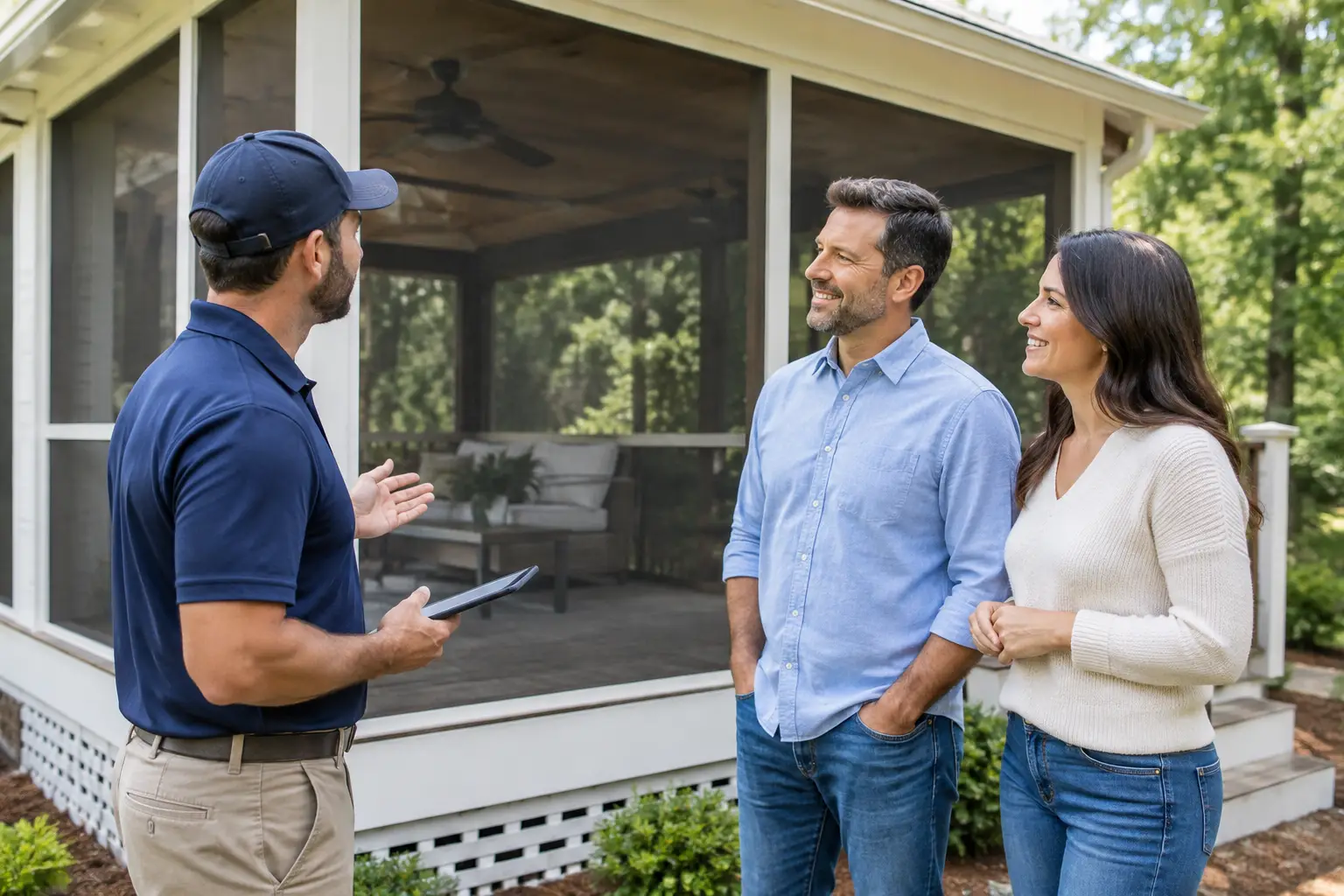
A screened porch should make your home more enjoyable from the first warm spring evening through the crisp days of fall. It should keep insects out, provide shade and shelter, and feel like a natural extension of your home. Choosing the right screened porch contractor is what turns that expectation into a structure you can rely on for years.
For homeowners in Delaware and Southern Chester County, a screened porch is not a small cosmetic upgrade. It affects how you use your yard, how water moves around your home, and how your exterior holds up through humid summers, coastal weather, wind, and winter temperature changes. The contractor you choose should be prepared to address all of it, not simply attach screen panels to an existing deck.
Start With the Structure, Not the Screens
The screens are the visible feature, but the framing, footings, roof connection, and drainage details determine whether a porch performs well over time. A well-built screened porch begins with a clear assessment of the site and the existing structure. If the porch will sit on a deck, the contractor should verify that the deck framing and footings can support the added roof load. If it will be built at ground level, the foundation and surface should be planned for stability and water management.
Ask how the roof will connect to the home, how flashing will protect that connection, and where rainwater will go once it leaves the roof. These details may not be as exciting as choosing a ceiling finish or rail style, but they are where costly problems often begin. A porch that looks good on installation day can still develop leaks, movement, or premature wear if the structural work is treated as an afterthought.
An experienced contractor will explain the plan in plain language. You should understand what is being supported, what materials are being used, and why those choices fit your home. If the answers are vague or the proposal only describes a “screen room” without construction details, ask for more information before moving forward.
What a Qualified Screened Porch Contractor Should Provide
A professional screened porch contractor should offer more than a rough price and a start date. You are hiring a team to manage a significant improvement to your property, so the planning process should create confidence before construction begins.
Look for a contractor that is fully licensed, bonded, and insured, with a record of completed outdoor-living projects in your area. Local experience matters because permitting requirements, soil conditions, common home styles, and weather exposure vary from place to place. A contractor who regularly works in New Castle, Kent, and Sussex counties understands the questions that need to be answered before materials arrive.
The proposal should clearly describe the scope of work. That includes the framing approach, roof style, screening system, flooring or deck surface, railings, stairs, electrical options, and any demolition or site preparation. It should also identify who is responsible for permits and inspections. Clear documentation protects both the homeowner and the contractor by preventing assumptions from becoming change orders later.
Professional job-site practices are equally important. Ask who will supervise the work, how the site will be kept safe, how materials will be stored, and how communication will be handled if a condition is discovered after construction starts. Owner-supervised quality control provides another layer of accountability, especially on projects involving structural connections and detailed finish work.
Look Beyond the Lowest Quote
A low quote can be tempting, particularly when several proposals appear similar at first glance. They rarely are. One contractor may include proper footings, flashing, permit coordination, premium screening, and complete trim work, while another may be pricing a more basic enclosure with fewer safeguards and exclusions buried in the fine print.
Compare proposals line by line. If one price is substantially lower, find out what has been omitted. Is the contractor reusing framing that should be upgraded? Are electrical work, gutters, staining, or permit fees excluded? Is the roof system designed to match the home, or is it a simplified solution that may look out of place? The goal is not to choose the most expensive option automatically. It is to choose the proposal that accurately reflects the work your home needs.
Value also includes durability and maintenance. Pressure-treated framing, composite decking, PVC trim, aluminum rail systems, and high-quality screen materials can have different upfront costs, but they can reduce long-term maintenance and improve the finished appearance. The best material combination depends on the porch design, sun exposure, budget, and how you plan to use the space.
Design for the Way You Actually Live
A screened porch works best when it is designed around real routines, not just a photo you liked online. Think about when your family uses the backyard, where the afternoon sun falls, whether you want dining space, and how people will move between the kitchen, yard, deck, or pool area.
Ceiling height, roof pitch, screen placement, and porch orientation all affect comfort. A west-facing porch may benefit from additional shade or privacy panels. A porch near a wooded area may need a finer screen choice to keep out smaller insects. A large opening can improve the view, but it may also require more substantial framing. These are not reasons to avoid the design you want. They are reasons to work with a contractor who can balance appearance, function, and structural requirements.
Consider the features that make the space useful after dark and in changing weather. Ceiling fans, recessed lighting, steps with integrated lighting, a finished ceiling, privacy screens, and an adjoining patio can make the porch feel intentional rather than added on. If the porch is being built over a deck, matching the decking and railing to the rest of the outdoor space creates a more polished result.
Ask About Materials and Warranty Protection
Quality materials matter, but proper installation matters just as much. Manufacturer specifications are there to protect performance, drainage, structural integrity, and warranty coverage. A contractor should be comfortable explaining how the selected products will be installed and what warranty protection applies to the finished project.
For example, a screened porch over a composite deck should account for board spacing, framing condition, stair details, railing connections, and how the roof posts transfer load. If you are considering Trex decking as part of the project, work with a contractor whose experience extends beyond selling the product. Installation standards, design options, and finished details all affect the result.
Ask for warranty information in writing, including what is covered by the manufacturer and what the contractor stands behind. A transferable manufacturer warranty can be a meaningful advantage for long-term ownership and resale, but homeowners should understand its terms rather than treating warranty language as a substitute for sound workmanship.
See the Work Before You Sign
Photos are helpful, but a showroom visit and an in-person look at completed work can tell you much more. Pay attention to how posts align, how trim meets the home, whether screen panels are taut, how stairs feel underfoot, and whether the roofline looks like it belongs with the house. Details reveal the care behind the project.
During a consultation, ask to see material samples and full-size displays when possible. Colors and textures can look very different outdoors than they do in a small sample or online image. This is also the right time to discuss budget priorities honestly. A dependable contractor can help you decide where premium upgrades will have the greatest impact and where a simpler solution makes sense.
Deck Masters brings more than 20 years of outdoor-living construction experience to screened porch projects, with hands-on planning, professional installation, and owner-supervised final inspection. That level of responsibility matters when your new porch must perform as well as it looks.
Choose Confidence Over Guesswork
The right contractor will not pressure you to make a fast decision or promise a one-size-fits-all solution. They will inspect the site, listen to how you want to use the space, explain the construction plan, and provide a proposal you can understand. They will also be available to answer questions before, during, and after the work is complete.
A screened porch is where family dinners last longer, rainy afternoons become relaxing, and your yard becomes part of daily life. Take the time to choose a contractor whose craftsmanship, communication, and accountability give you confidence before the first post is set.