

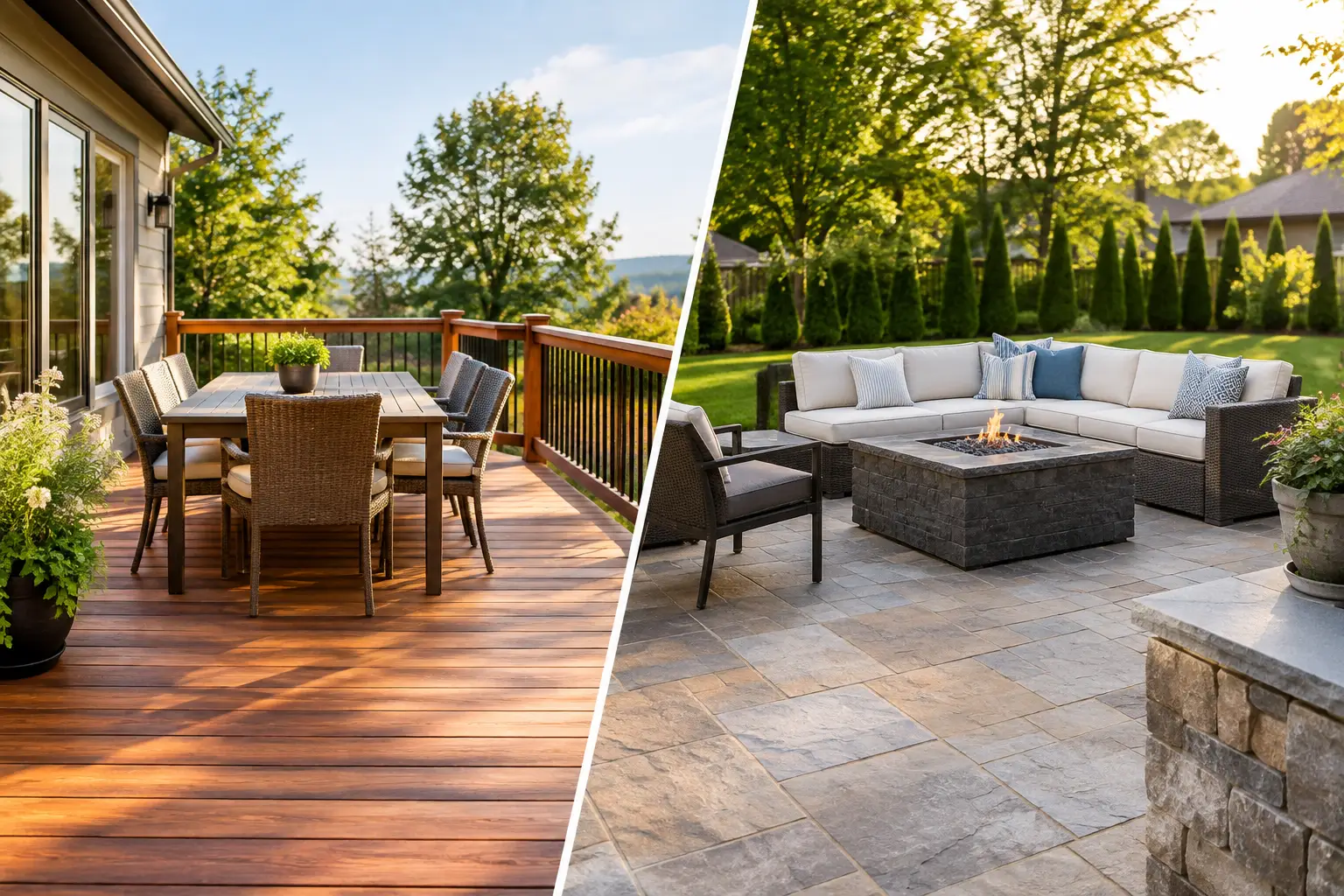
A backyard project can look simple from the kitchen window: add a place for a table, a grill, and a few chairs. Once planning begins, however, deck versus patio costs become a much bigger conversation. The right answer depends on your yard, the height of your doors, how you want to use the space, and whether you are investing for the next few years or the next few decades.
A patio is not automatically the budget choice, and a deck is not automatically the premium choice. A well-built concrete patio on a flat, accessible yard may cost less than a raised composite deck. But grading, drainage work, retaining walls, premium pavers, and outdoor features can quickly put a patio in the same range as a deck. The best value is the project that fits your property correctly and delivers the outdoor living area your family will actually use.
Deck Versus Patio Costs: Start With the Site
The biggest cost factor is often beneath the finished surface. A deck is elevated and supported by footings, framing, posts, beams, and hardware. A patio rests on prepared ground, which means the soil, slope, water flow, and access to the backyard all matter.
For a deck, the height from the ground to your back door is a major consideration. If that door sits several feet above grade, a deck can create a level transition from the house to the yard. Building a patio at ground level may require a long run of stairs, which can reduce convenience and usable space. A deck may also be the more practical option on a sloped lot, where a patio would need substantial excavation, fill, or retaining walls to create a level area.
For a patio, site preparation is where estimates can change. The contractor may need to remove an existing slab, excavate unsuitable soil, install a compacted stone base, correct drainage, or build edging to hold pavers in place. Concrete patios require proper base preparation, reinforcement where appropriate, control joints, and correct slope away from the home. Those steps are not optional details. They help prevent settling, standing water, cracking, and costly repairs later.
Delaware properties also experience freeze-thaw cycles, heavy rain, and humid summers. Whether you choose a deck or a patio, the structure and drainage plan should be built for local conditions, not simply for a good first-day appearance.
What Drives the Cost of a Deck
Deck pricing is shaped by size, elevation, material, framing requirements, railing, stairs, and custom features. A basic low-level pressure-treated deck with simple steps has a very different price point from a multi-level Trex deck with drink rail, lighting, privacy panels, and a covered section.
Material choice has a clear impact. Pressure-treated lumber generally has a lower upfront material cost, but it requires regular cleaning, staining, or sealing to maintain its appearance and service life. Composite decking, including Trex options, costs more at installation but can reduce ongoing maintenance. It resists rot, splintering, and insect damage, and it does not require the repeated staining cycle associated with wood.
The visible boards are only part of the investment. Quality deck construction depends on the framing system below them. Proper footings, secure ledger attachment where applicable, corrosion-resistant fasteners, correctly spaced joists, and framing designed around the selected decking all affect both price and long-term performance. Cutting corners below the deck can create movement, drainage issues, or premature board wear above it.
Railings are another significant variable. A deck close to ground level may need little or no railing, while an elevated deck requires code-compliant guardrails. Composite, aluminum, cable, and drink rail systems each create a different look and budget. Stairs can also add considerably to the total, particularly when they include landings, wide treads, lighting, or custom handrails.
A premium deck often earns its value through function. Underdecking can turn dry space below an elevated deck into a usable patio area. Skirting or lattice can finish the perimeter. Low-voltage lighting improves safety after dark. These additions raise the project cost, but they can make the outdoor space feel like a complete extension of the home rather than a platform with furniture on it.
What Drives the Cost of a Patio
Patios vary widely because the surface material and foundation work vary widely. A poured concrete patio is often a straightforward option when access is good and the yard is relatively flat. Decorative finishes, color, stamping, borders, or specialty shapes increase the cost but can give concrete a more custom appearance.
Paver patios typically require more labor and base preparation than a basic concrete slab. Each paver must sit on a stable, properly compacted foundation, with edge restraint and joint material that holds the field together. The result can be highly attractive and flexible in design, especially for curves, borders, and patterns. If repairs are ever needed, individual pavers can often be lifted and reset more easily than replacing a damaged section of concrete.
Natural stone provides a high-end appearance, but material selection, cutting, fitting, and installation can make it one of the more expensive patio choices. Retaining walls, seat walls, outdoor kitchens, fire features, and built-in lighting can further transform a patio into a substantial hardscape project.
Homeowners should also consider water management before choosing a patio. A patio needs a deliberate slope so rainwater moves away from the house. If the yard naturally drains toward the foundation, correcting that issue may require additional grading or drainage components. That work is valuable because it protects more than the patio – it helps protect the home.
Upfront Price Is Only Part of the Equation
When comparing deck versus patio costs, homeowners should evaluate ownership costs over time, not just the proposal total. Wood decks require a maintenance plan. Depending on exposure and condition, that may include washing, sanding, sealing, staining, and replacing boards or fasteners as they age. Composite decking has an upfront premium, but its low-maintenance nature is a major reason many homeowners choose it.
Patios have maintenance needs as well. Concrete may crack over time, especially if soil movement or water issues are present. Pavers may need periodic joint sand replacement, cleaning, and occasional resetting. Trees can drop debris, roots can affect surfaces, and outdoor furniture can create stains or wear patterns. No outdoor surface is maintenance-free, but the type and frequency of care differ.
Durability also depends on installation quality. A patio installed over an inadequate base and a deck built with undersized framing are both expensive mistakes. The lower quote is not always the lower cost when it leaves out preparation, structural details, warranty coverage, or responsible cleanup.
How Your Lifestyle Changes the Better Choice
A patio can be an excellent fit for a ground-level entertaining area, pool surround, fire pit zone, or garden setting. It creates a solid surface that feels connected to the landscape and can be especially useful where the home opens near grade.
A deck is often the stronger choice when the main living level is above the yard, when views matter, or when the property slopes away from the house. It can bring the outdoor area directly to the door, making it easier to carry meals outside, watch children in the yard, and use the space every day. Composite decking also appeals to homeowners who want a polished appearance without planning weekends around staining and repairs.
Many of the most functional backyards use both. A deck off the home can handle dining and everyday access, while a paver or concrete patio below provides room for a fire feature, lounge seating, or a grilling area. This approach may cost more initially, but it creates distinct outdoor zones and can make a challenging yard far more useful.
Get an Estimate Built Around Your Property
Online price ranges can help set expectations, but they cannot account for your elevation, access, soil conditions, existing structures, selected materials, or design goals. A dependable estimate should identify the scope of site work, material allowances, structural components, railings or borders, stairs, drainage needs, and the finish details that matter to you.
At Deck Masters, LLC, projects begin with the homeowner’s goals and the realities of the property. As Delaware’s TrexPRO Platinum Installer, the team can help homeowners compare a low-maintenance composite deck with paver or concrete patio options, then explain where the budget is going before construction begins. Owner-supervised work, proper construction methods, and a clear final inspection help protect the investment long after the project is complete.
Before deciding, stand at your back door and picture a normal Saturday: morning coffee, a family meal, friends visiting, and the cleanup afterward. The space that makes those moments easiest is usually the one worth building well.