

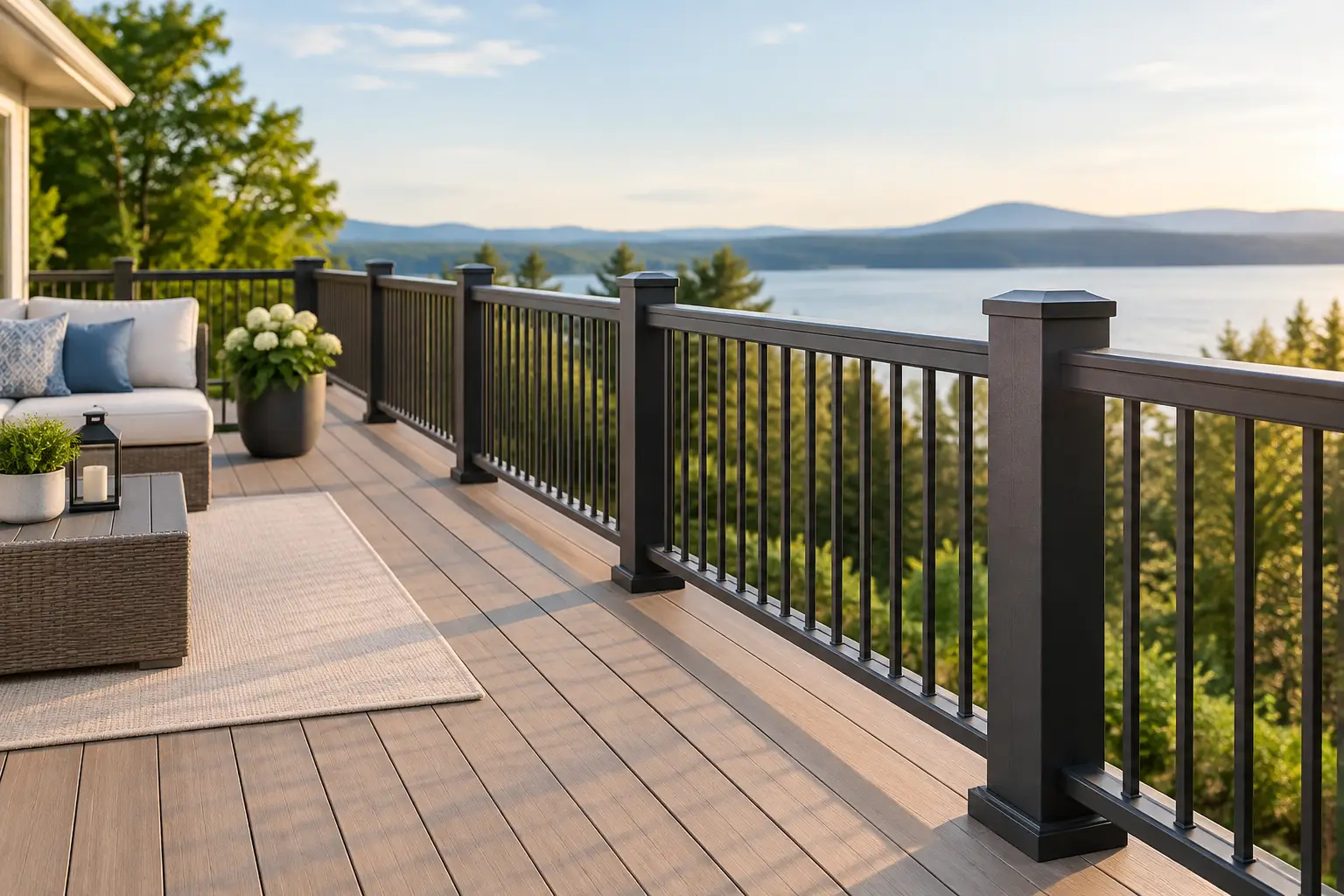
A deck can have beautiful boards, clean lines, and a great view, then still feel unfinished if the railing system is an afterthought. Composite railings do more than define the edge of your deck. They create a secure boundary for family and guests, shape the overall look of the space, and can turn a simple platform into a polished outdoor living area.
For Delaware homeowners, the right railing must also stand up to humid summers, winter moisture, strong sun, and the everyday use that comes with cookouts, kids, pets, and entertaining. Selecting a railing system is not just a color decision. It is a decision about safety, maintenance, design, and the long-term performance of your investment.
What Composite Railings Bring to a Deck Design
Railings sit at eye level, which means they have an outsized effect on how a deck looks from the yard, from inside the home, and from the street. A well-chosen system can frame a water view, complement existing siding and trim, or add contrast to a deck surface without making the space feel closed in.
Composite railing components are designed to provide the finished appearance homeowners want without the frequent scraping, staining, and painting associated with many wood railings. They are available in traditional white, darker colors, and combinations that pair a composite top rail with metal balusters or cables. That range makes it possible to design for a classic porch, a low-profile contemporary deck, or a more formal backyard entertaining area.
The best choice depends on the architecture of the home and how the deck will be used. A large elevated deck may benefit from substantial posts and a wide top rail that feels secure in the hand. A smaller deck near a garden may look better with slimmer balusters and a lighter visual profile. The railing should support the deck’s purpose, not compete with it.
Start With Safety and Local Code Requirements
A railing is a safety system first. Height, baluster spacing, stair configuration, post attachment, and handrail requirements are governed by building codes, and the details matter. The exact requirements can vary by municipality and by the conditions of the project, especially when a deck is elevated or includes stairs.
A professionally built railing system begins with secure framing and properly installed structural posts. Decorative sleeves, caps, and trim can make posts look finished, but they do not replace the underlying structure. Posts must be fastened correctly to the deck framing so the completed railing can resist the force of people leaning against it or gathering along the perimeter.
This is one area where homeowners should be cautious about mixing products or improvising an installation. A railing may look solid on the first day yet develop movement over time if posts, brackets, or fasteners were not installed to the manufacturer’s specifications. Quality construction is what makes a railing feel dependable years after the project is complete.
Stairs require the same attention. A graspable handrail, consistent stair geometry, secure connections, and code-compliant spacing help make access safer for children, older family members, and guests carrying food or drinks outside. These details may not be the first thing a homeowner notices in a showroom, but they are often the details that determine whether a deck feels comfortable to use every day.
Choosing the Right Railing Style
The railing style should be selected alongside the deck boards, not after construction has started. Color, scale, and the sightline through the railing all affect the finished result.
Composite railings with square balusters offer a familiar, traditional appearance that works well with Colonial, Craftsman, and many suburban Delaware homes. They create a defined perimeter and can coordinate nicely with a covered porch, pergola, or privacy panel.
Metal balusters provide more contrast and allow more visual openness than a fully composite infill. Black balusters paired with a white or earth-toned rail are a popular option for homeowners who want a crisp, tailored look. For a backyard with mature trees, a pool, or a broad view, this combination can keep the focus beyond the deck rather than on the railing itself.
Cable railing offers the cleanest view, but it is not automatically the right answer for every home. It typically carries a higher material and installation cost, and the system must be tensioned and maintained correctly. In some settings, a well-designed aluminum or composite-and-metal railing delivers much of the open look while better matching the home’s style and budget.
A cocktail rail cap is another practical design choice. By using a flat, wide cap board along the top of the railing, homeowners gain a convenient surface for drinks, planters, or serving trays. It is a small feature that can make an entertaining deck feel more functional without increasing its footprint.
Color and Contrast Matter More Than You Think
Many homeowners initially focus on matching the railing to the deck boards. Matching can create a unified appearance, particularly on a smaller deck. However, contrast often gives the design more definition. A white railing can brighten a darker deck, while black accents can add depth to a gray or warm-brown decking color.
Consider the home’s fixed elements before deciding. Window trim, siding, shutters, brick, stone, and existing porch columns all provide useful direction. The goal is not to match every surface exactly. It is to choose colors that look intentional together.
It also helps to view full-size samples outdoors. Color changes in direct sunlight, shade, and the softer light of evening. A color that looks perfect under showroom lighting may read warmer, cooler, or brighter once it is installed next to your home. A physical display gives homeowners a far better basis for comparison than a small color chip.
Maintenance Expectations for Composite Railing Systems
Low maintenance does not mean no maintenance. Composite railings do not require routine painting or staining, but they still benefit from periodic cleaning. Pollen, mildew, dirt, sunscreen residue, and food spills can collect on horizontal surfaces, especially in shaded or damp areas.
A gentle wash with appropriate cleaning products and a soft brush is usually enough to keep the system looking its best. Avoid harsh abrasives, which can damage the finish, and follow the manufacturer’s recommendations for any specific product. Checking connections, post caps, and stair hardware as part of seasonal deck care is also a sensible habit.
Different product lines have different finishes, warranty coverage, and care requirements. That is why material selection should be based on more than appearance. The right system should suit the home’s exposure, the deck design, and the level of upkeep the homeowner is comfortable performing.
Why Professional Installation Protects the Investment
Railing installation involves precise measurements, level lines, secure posts, and careful coordination with stairs, lighting, skirting, and deck framing. Small mistakes can be visible from across the yard. More seriously, poor attachment can compromise safety.
An experienced deck contractor evaluates the whole structure before the railing goes on. That includes the condition and layout of the framing, the locations of posts, transitions at stairs, and the placement of lighting or privacy features. This coordinated approach avoids the common problem of forcing a railing design to fit a deck that was not planned for it.
Deck Masters brings more than 20 years of deck-building experience to this work, with owner-supervised installation and attention to manufacturer specifications. For homeowners, that means the finished railing is treated as part of a complete deck system, not a decorative add-on.
Plan the Railing Before You Finalize Your Deck
The strongest outdoor spaces are designed as a whole. If you are considering a new deck, porch, or major renovation, decide early whether you want a traditional rail, metal balusters, a cocktail cap, integrated lighting, privacy panels, or a more open view. These choices affect framing, budget, material quantities, and construction details.
A consultation and showroom visit can make those decisions easier. Seeing full-size railing options, touching the materials, and comparing colors next to decking samples helps homeowners move forward with confidence. Your home is your castle, and the railing around your outdoor space should feel just as secure and well considered as the deck beneath it.